
In the vast and storied mythology of J.R.R. Tolkien’s Middle-earth, few mysteries are as poignant or enduring as the disappearance of the Entwives. The scene in The Two Towers, where Treebeard, the eldest of the Ents, laments the loss of the female counterparts of his kind with a heavy, wooden heart, may be familiar. These beings were not merely female Ents; they were the guardians of the gardens and the mistresses of agriculture who brought order to the wild growth of the world. Their absence is more than just a plot point, as it represents a fundamental breaking of the natural cycle that eventually leads to the slow fading of the Entish race itself.
Spending time wandering through the lore reveals that Tolkien rarely left stones unturned, yet he purposely kept the ultimate fate of the Entwives shrouded in shadow. This was not an oversight by the author, but rather a deliberate choice to mirror the themes of loss and the “long defeat” that permeate his legendary works. The search for the Entwives is not just a quest for a lost people; it is a journey into the philosophical heart of how different beings relate to the land they inhabit. The history, heartbreak, and haunting possibilities surrounding where these beloved gardeners may have vanished during the tumultuous Second Age invite deeper reflection.
A Divergence of Heart and Hearth
 Thomas Schweighofer on Unsplash
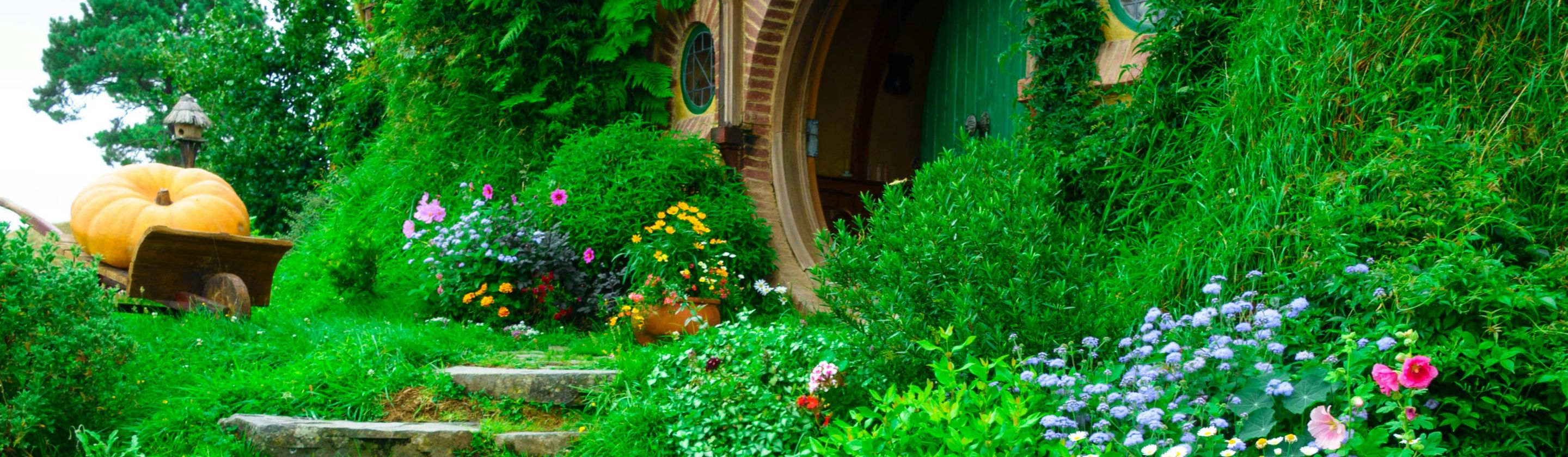
The seeds of the Entwives’ disappearance were planted long before the War of the Ring. Ents and Entwives disagreed philosophically on how they viewed nature. The Ents loved the tall trees and vast wilderness of forests and mountains, while their wives came to love things smaller and closer to the ground. Flowers, grasses, and fruit trees became their passion. The desire to shape and organize the earth grew stronger, bending it into order rather than allowing it to remain wild and untamed in its ancient rhythms. If the Ents were the caretakers of the forest, the Entwives became the first gardeners and farmers of Middle-earth.
The disparity between what the two groups loved drove them apart until the Entwives left Middle-earth altogether by crossing the Great River Anduin. There, they built what became known as the “Brown Lands” and crafted gardens that supplied food and flowers for the Men living in the area. They sought to raise crops in sunlight and open plains, rather than in the dark shadows of Fangorn Forest. Despite their differences in interests and paths, the Ents and Entwives still loved each other with strong, druidic hearts. It was only after both groups fell out of contact that the true extent of their separation became clear.
Long after the Entwives had left, the Ents made a pilgrimage to visit their wives’ magnificent gardens. What should have been a lush and fruitful paradise was instead a burned-out shell of smoldering earth. Sauron had used a scorched-earth strategy during the War of the Last Alliance, completely destroying the gardens and all life within them. No Entwife was ever seen again. Not Treebeard, nor any of his vast kin, could find so much as a clue that they had survived.
Tolkien’s Letters and the Darker Truth
For those seeking a definitive “happily ever after,” the private letters of J.R.R. Tolkien offer a far more somber perspective. In his correspondence, particularly Letter 144, the author suggests that the Entwives likely perished along with their gardens during the devastation wrought by Sauron. He notes that if any did survive, they would have been driven far to the East or enslaved by the Dark Lord to provide food for his armies. It is a chilling thought that these gentle gardeners may have ended up as forced laborers in service of the very shadow that destroyed their homes.
Tolkien also suggested that even if the Entwives escaped the burning lands, they would have been so changed and divorced from the Ents that they could never return to who they once were. Their beloved “order” would be replaced by endless monotony. They would labor only to survive, eventually losing their identity as Ents entirely and becoming mere stories, or worse, “tree-ish” beings who no longer spoke. The loss of identity was a recurring theme in Tolkien’s vision of Middle-earth. Races begin noble and grand but, as the world ages, slowly fade, diminish, and disappear. This helps explain why Treebeard sings songs of longing. The grief is not only for individual Entwives, but for an entire way of life lost forever.
It is even suggested that by the Third Age, most people had forgotten the Entwives ever existed. Some interpretations place them in the Far North or hidden among the Shire, but Tolkien’s own writings point toward a far bleaker outcome. For a story to carry meaning, some losses must be final. To truly understand the weight of war and destruction, readers must also understand what cannot be recovered. The Entwives represent that loss, innocent lives caught in a conflict they never chose.
Ultimately, the mystery of the Entwives stands as one of the most powerful symbols of the “world-weariness” that defines the end of the Third Age. Whether they are hidden in a distant land or have long since passed into the halls of Mandos, their absence shaped both the Ents and the tone of the larger story. Even without a clear answer, the search itself reveals something essential about the value of peace and the tragedy of what is lost in war. The hope remains that, in some undying land or future age, the shepherds and the gardeners may one day find their way back to each other.