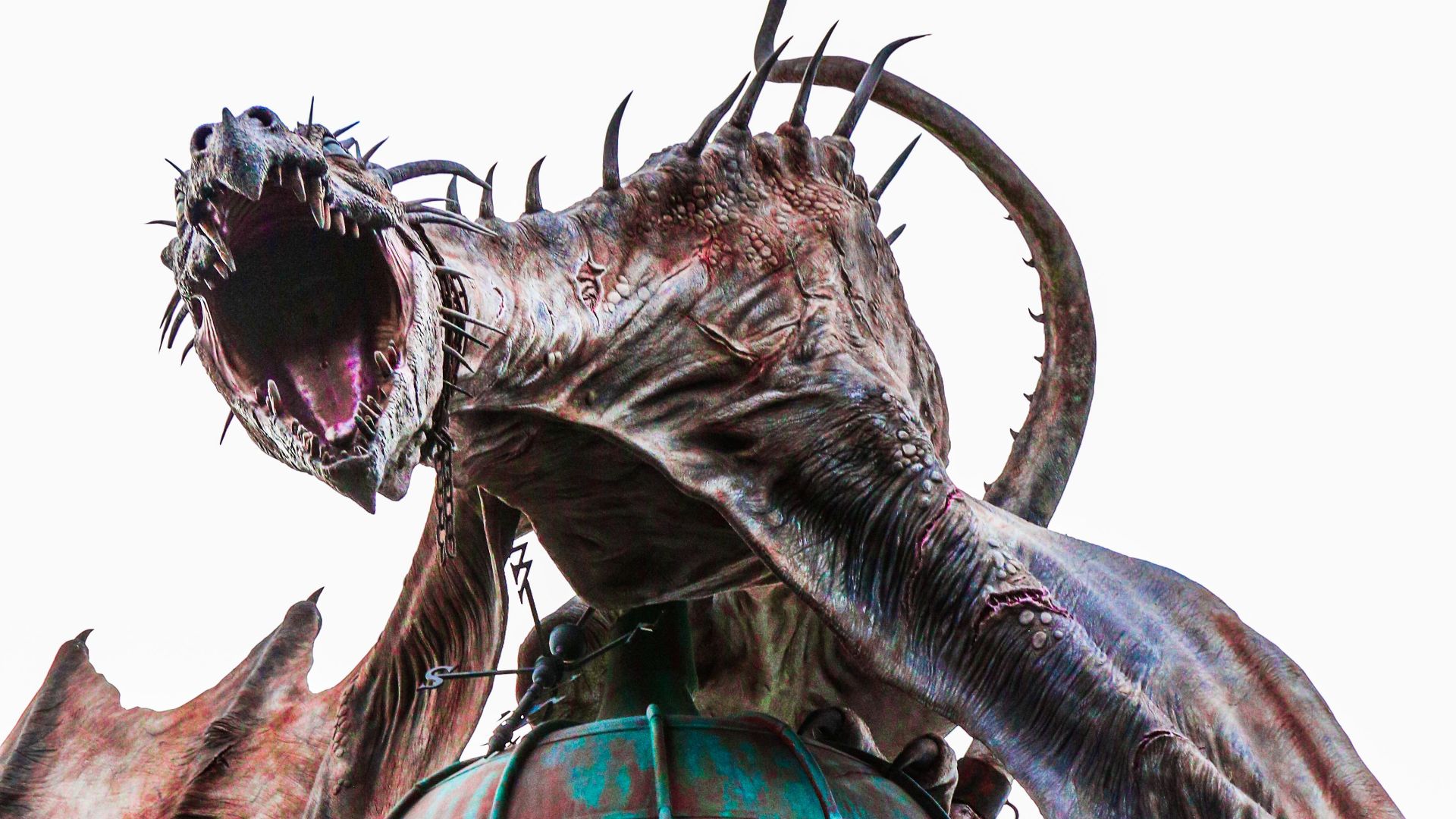
Hogwarts has a class schedule that looks incredible on paper and slightly miserable in practice. Potions happens in a cold dungeon under a professor who plays favorites, and History of Magic gets taught by a ghost with a monotone so flat it puts half the room to sleep, Hermione Granger included, according to the very first mention of the class in Harry Potter and the Sorcerer's Stone. Divination involves squinting at tea leaves and pretending to see doom in the shape of a soggy clump at the bottom of a cup.
And yet one class keeps showing up as the one people actually want to sit in on, the one that sounds fun even when it goes sideways. Care of Magical Creatures has blast-ended skrewts, flying hippogriffs, and a professor who clearly loves his subject more than his own safety, and somehow that combination beats everything else on the schedule.
Care Of Magical Creatures Doesn't Feel Like School
Most Hogwarts classes happen indoors, at a desk, with a textbook open and a wand pointed at something small and controllable, which is exactly the kind of setup that makes a subject start to feel like homework before it even begins. Care of Magical Creatures happens outside instead, near the edge of the Forbidden Forest, close enough to Hagrid's hut to smell whatever is cooking, or occasionally hatching, inside it. There is rarely a desk in sight, and class tends to start whenever the creature of the week decides it is ready.
That looseness turns out to be a big part of the appeal. Students introduced to hippogriffs in Harry Potter and the Prisoner of Azkaban have to learn to bow first and wait for the creature to lower its head in return before getting any closer, which is a lesson that comes from standing there and doing it rather than reading about it beforehand. Nobody really memorizes a hippogriff off a page, since the only way to understand one is to meet it carefully and hope it bows back. That kind of learning tends to stick in a way that copying notes off a blackboard rarely does.
Outdoor classes carry a different energy than indoor ones, and that holds true well beyond the world of Hogwarts. Sitting under open sky with something alive and unpredictable nearby changes the mood of the whole hour, in a way that no amount of good lighting in a classroom can quite recreate. Hogwarts already has plenty of subjects built around order and precision, so this one running on attention instead feels like a small relief, and watching someone practice that kind of attention is far more interesting than watching them recite a spell correctly.
A Little Danger Makes It Memorable
Nobody really walks away from Transfiguration with a story worth repeating at dinner, but Care of Magical Creatures hands one out almost every week. Draco Malfoy gets injured by Buckbeak after ignoring a direct warning about how to approach him, and that single moment ends up driving a good portion of the plot in Prisoner of Azkaban. Blast-ended skrewts, introduced a few books later in Goblet of Fire, turn out to be nearly impossible to feed or contain, and the class spends weeks just trying to keep them from setting the paddock on fire.
None of that sounds particularly relaxing, and yet it explains a lot about why the class holds attention the way it does. A little risk raises the stakes of simply showing up. A lecture about wand movements tends to fade from memory fast, while standing a few feet from something that might sting or breathe fire has a way of sticking around much longer in the mind. Hagrid only adds to that feeling, since he tends to introduce the most dangerous creatures with the kind of pride most professors save for their best students.
Real classrooms rarely make room for this sort of thing, since school is mostly built to strip risk out of the day entirely, which is sensible and also part of why so much of it fades so quickly. Care of Magical Creatures skips that instinct almost completely, mostly because everyone who signs up already knows the forest is part of the deal. A good chunk of the appeal simply comes from not knowing what Tuesday has in store.
It Rewards Curiosity Over Memorization
Most subjects at Hogwarts reward getting the right answer on command, whether that means an exact ingredient list recited in order for Potions or a list of dates called back with no room for interpretation in History of Magic. Care of Magical Creatures asks for something slower than that, closer to patience than performance, the kind that comes from watching a creature long enough to figure out what it actually wants.
That shift matters more than it might seem at first. A student who studies hard for Charms can still fail if nerves take over during a practical exam, while a student who spends real time watching a creature, learning what sets it off and what calms it back down, tends to succeed almost regardless of how nervous the exam makes them, simply because that knowledge came from direct contact rather than a textbook.
This is probably why the class ages so well in memory, even for students who struggled with nearly everything else at Hogwarts. Hands-on learning has a way of outlasting memorized facts, both in fiction and outside of it. Care of Magical Creatures never really demands perfection from anyone, since all it asks is that students show up, pay attention, and hope the skrewt happens to be having a calm day.