Rollercoaster Tycoon is among the top tier of memorable games from the late 90s and early 2000s. The construction and management simulation game has the perfect amount of challenge and creativity woven into its code, which has made it stand out among sandbox games for well over 20 years.
The original RollerCoaster Tycoon launched on Windows in North America on March 22, 1999, with the second game following on October 15th, 2002. Both games offered you full control of various theme parks, with some letting you build from the ground up, and others having you take the reins of a preexisting park. You were able to design the park of your dreams, keep up to date on customer reviews, and even hire staff to keep your park in order. The insane level of detail was something unseen before this era.
The Design Is Simple to Read, and Deep Enough to Stick
A big reason these games remain satisfying is that the interface doesn’t treat you like you need a permission slip to have fun. Clear icons, straightforward menus, and consistent feedback make it easy to understand what’s happening without studying a spreadsheet disguised as a tutorial. The isometric presentation also helps, since the whole park stays legible while still looking lively. RollerCoaster Tycoon 2 kept that perspective specifically for compatibility with earlier parks, which says a lot about how much the format worked.
The “old” look is also doing more work than it gets credit for, because it keeps attention on the park’s behavior instead of on cinematic camera tricks. Guests swarm toward popular rides, complain when basics are missing, and telegraph problems in ways that push you to respond. That steady stream of cause and effect is the actual hook, and the visuals stay out of the way so you can notice it. When a path bottleneck turns into chaos, the game doesn’t need flashy effects to make the message land.
There’s also a gentle pacing to the originals that modern simulation games sometimes lose in the race to add features. Building a coaster piece by piece, tweaking prices, and placing scenery feels focused instead of noisy. RCT2 even expanded construction so walls and roofs could be placed individually, and scenery could sit at different heights, which turned parks into more personal creations. That kind of control stays fun because every small decision visibly changes the space you’re managing.
The Tech Is Efficient, So the Experience Feels Snappy
Speed matters more than people admit, and these games feel good partly because they respond fast. Chris Sawyer has stated that RollerCoaster Tycoon is “99% written in x86 assembler/machine code,” with a small amount of C for Windows and DirectX interfacing, which helps explain why the simulation runs so smoothly on modest hardware. When the game doesn’t lag every time you open a window or place a bench, it’s easier to stay in a creative flow. Even basic actions, like editing ride operations or hiring staff, feel immediate.
That efficiency also supports the series’ signature joy: watching a complicated system run in real time while you poke at it. Guests don’t just exist as decoration; they’re part of the feedback loop that turns your design choices into consequences. In RCT2, the game notes improved guest AI and the ability to create more complex paved areas, which encourages experimenting with layouts rather than repeating the same grid forever. A park becomes a living puzzle, and the performance holds up even when the place is packed.
The sales numbers back up how broadly this clicked with players, since the original wasn’t a niche darling that disappeared quietly. The game was announced as the best-selling PC game of 1999, and U.S. sales that year totaled 719,535 units with $19.6 million in revenue, according to reporting summarized from PC Data in the game’s documented sales history. By July 2002, it had sold over four million copies, which is an impressive run for a sim that looks like a cheerful ant farm. Commercial success does not automatically equal quality, yet it does show how well the core loop held attention over time.
The Community and Modern Tools Keep the Parks Alive
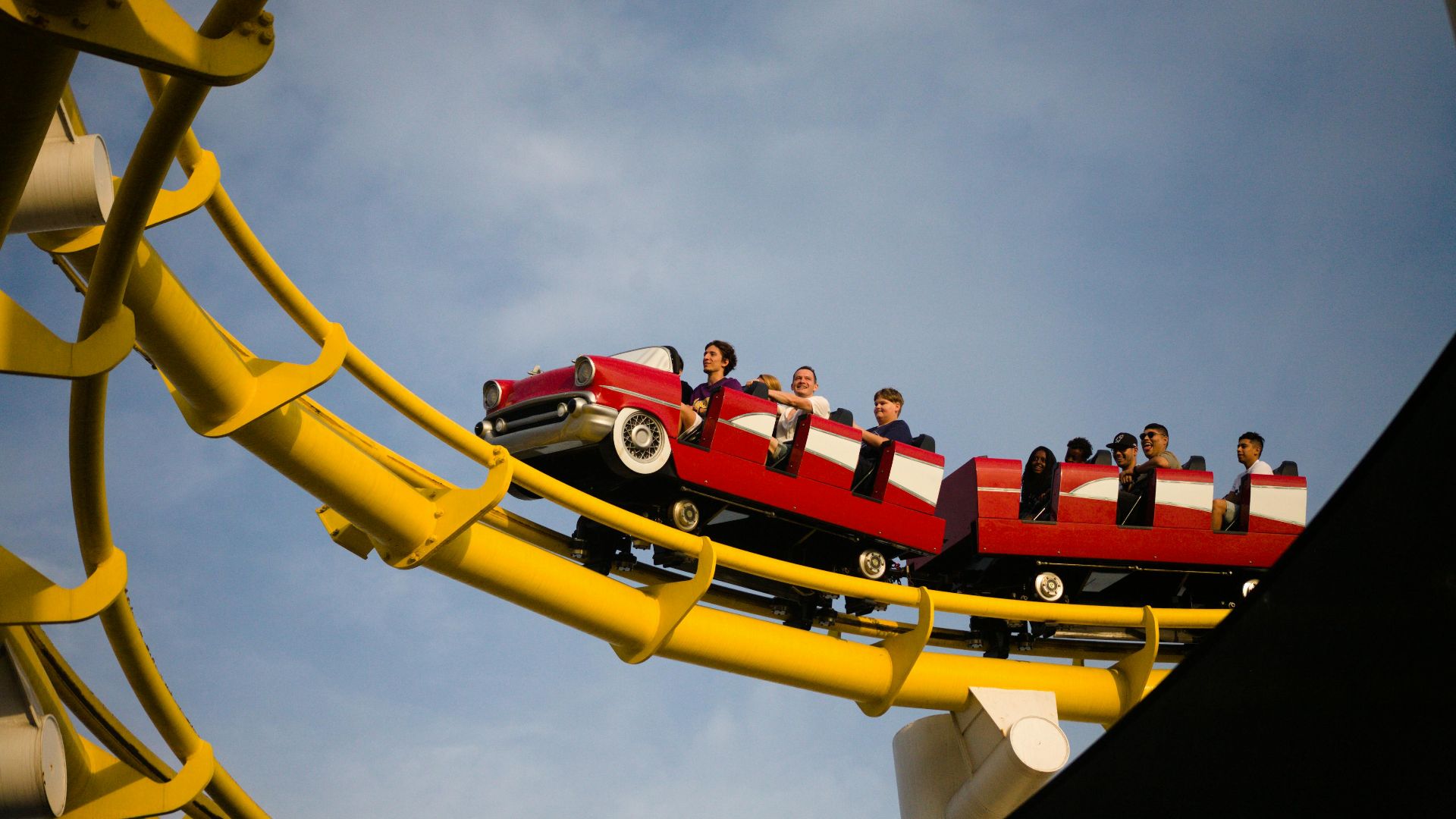 Sam Jotham Sutharson on Pexels
The original games also benefit from something lots of beloved classics never get: a player community that refuses to let them fade out. OpenRCT2 describes itself as an open source re-implementation of RollerCoaster Tycoon 2, and it exists specifically to keep playing, building, and sharing parks practical on modern systems. That means the old design tools remain accessible without relying on nostalgia alone to do the heavy lifting. When a game stays easy to run, it stays easy to recommend.
Longevity isn’t only about “can it launch,” though; it’s also about “does it still feel worth the time.” RCT2’s lasting appeal is helped by the way it organizes content into scenario folders, including beginner through expert tracks, plus real-world themed parks, which gives you structure without choking off creativity. A session can be a tidy, objective-driven challenge, a long-form sandbox project, or a chaotic experiment where the guests pay for your design choices emotionally and financially. Variety like that keeps the games from feeling one-note, even after years of play.
The series’ success is also well documented on the sequel side, which helps explain why it never really vanished from gaming conversation. Before RCT2 even released, global sales of the series had surpassed six million units, and combined sales including RCT2 and its expansions rose to seven million copies by April 2004, based on the game’s recorded sales history. In the United States, RCT2 sold 940,000 copies and earned $21.6 million by August 2006, which is strong for a sequel built on a familiar engine. Numbers like that point to a simple truth: people kept coming back because building parks, fixing disasters, and perfecting coasters stayed fun long after the original release hype evaporated.