

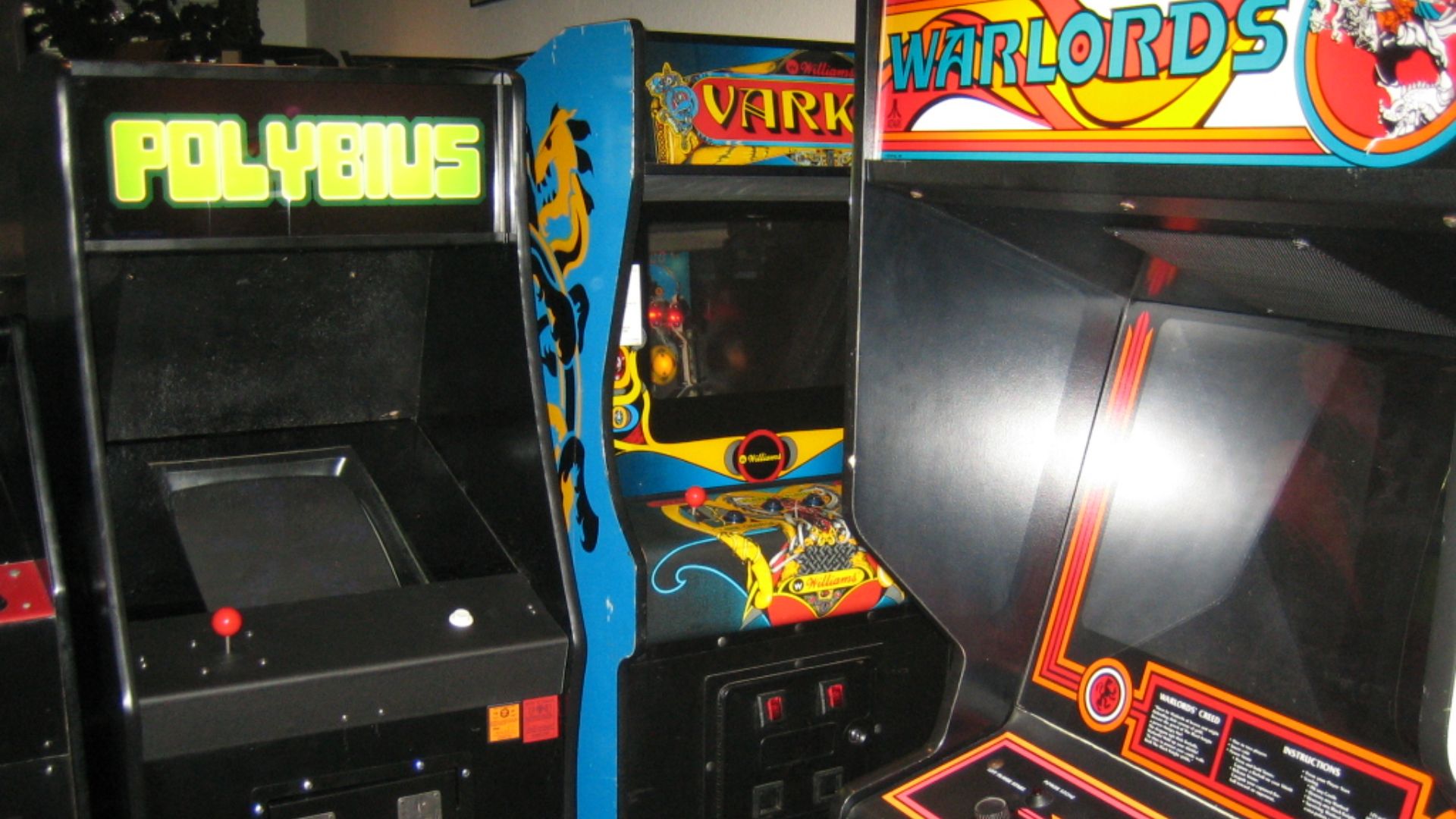
If you’ve ever wandered into the weird side of gaming lore, you’ve probably bumped into Polybius—the “lost” arcade cabinet that supposedly showed up, messed with kids’ brains, and then vanished. The story’s been repeated so often that it can feel entirely true, like you’re just one dusty arcade away from finding the proof. And heaven knows, people have tried to follow the rabbit hole.
Here’s the twist: the best-documented parts of Polybius aren’t from 1981 arcades at all. They’re from the internet age, where a good rumor can level up into a full-on legend with “men in black,” fake companies, and spooky screenshots before anyone remembers to ask, “Wait… did this ever happen?” Come with us as we explore this never-ending rumor that took on a life of its own.
The Legend: A Cabinet That Wasn’t There

In the classic version, Polybius appears around Portland, Oregon, in 1981, sitting in an unmarked cabinet. People claim the game’s visuals were abstract and intense, and that it hooked players fast—fast enough that kids lined up, fought over turns, and kept coming back even when it made them feel awful. Instead of the usual bragging, the rumor went straight for the dramatic stuff: headaches, memory gaps, insomnia, even seizures and hallucinations.
Then come the men in black, because of course they do. According to the myth, mysterious suits showed up to “service” the machine, check numbers, and record player reactions, sometimes without even emptying the coin box. A few weeks later, the cabinets allegedly disappeared, leaving nothing behind except shaky memories and the kind of vague details that always get stronger the more you retell them.
As you can imagine, the whole story blew up. If anything, it didn’t just target kids’ curiosity, it targeted their parents, too. Parents today worry about their children’s video game usage, but it was just as prevalent in the ‘80s; that blend makes the tale feel like it could’ve happened, even when the evidence for an actual release just doesn’t show up.
Where the Story Actually Came From

When you trace the paper trail, it doesn’t lead to an old arcade. The earliest widely discussed anchor is an entry on CoinOp.org describing Polybius as if it were a real 1981 cabinet, complete with ominous notes about a rumored ROM that can’t be located. That listing—and its comment trail—helped give the myth a “database legitimacy” that rumors usually don’t have.
Not long after, Polybius got a bigger microphone. Accounts commonly point to GamePro as the first major print spotlight, with the legend showing up in the magazine’s “Secrets and Lies” feature in the September 2003 issue. Once a mainstream gaming outlet treats something as a “mystery,” even with skepticism, the story stops being niche and starts feeling like a cultural artifact.
Researchers and skeptics also highlight how weird the timeline is: there’s no solid evidence of the cabinet during the actual arcade boom, and the legend’s details mostly crystallize online decades later. Modern deep dives—like Stuart Brown’s Ahoy documentary—lay out how the story appears to grow through posts, updates, and inventive “insider” claims rather than through verifiable hardware or software.
However, some of the “it feels real” energy may come from genuine events. For example, reporting and later commentary discuss incidents in Portland involving kids getting sick after marathon arcade sessions, plus law enforcement attention on arcades in that era. Those real-world fragments can act like kindling, letting a later internet legend burn hotter than it otherwise would.
Why Polybius Won’t Quit

Even if you accept that the original cabinet probably never existed, Polybius still thrives because it’s basically the perfect modern myth: it’s got nostalgia, fear, conspiracy flavor, and just enough “missing evidence” to keep people hunting. The lack of a confirmed ROM or original machine doesn’t ruin the story—it fuels it.
Pop culture also keeps feeding the beast. You’ll find modern cabinets, screenshots, and downloadable games that claim to be recreations, even though they’re contemporary builds rather than recovered artifacts. That matters because once people can see something labeled Polybius, the label starts doing emotional work, making the legend feel tangible even when it’s really a tribute (or a prank with great branding).
What you’re really watching is storytelling in the wild: a rumor gets posted, gets repeated, gets polished, and eventually becomes a shared reference point—like a campfire tale for anyone who misses the arcade era. So the “story is less about a sinister cabinet and more about how easily we’ll press Start on a mystery, especially when the screen flickers just right.