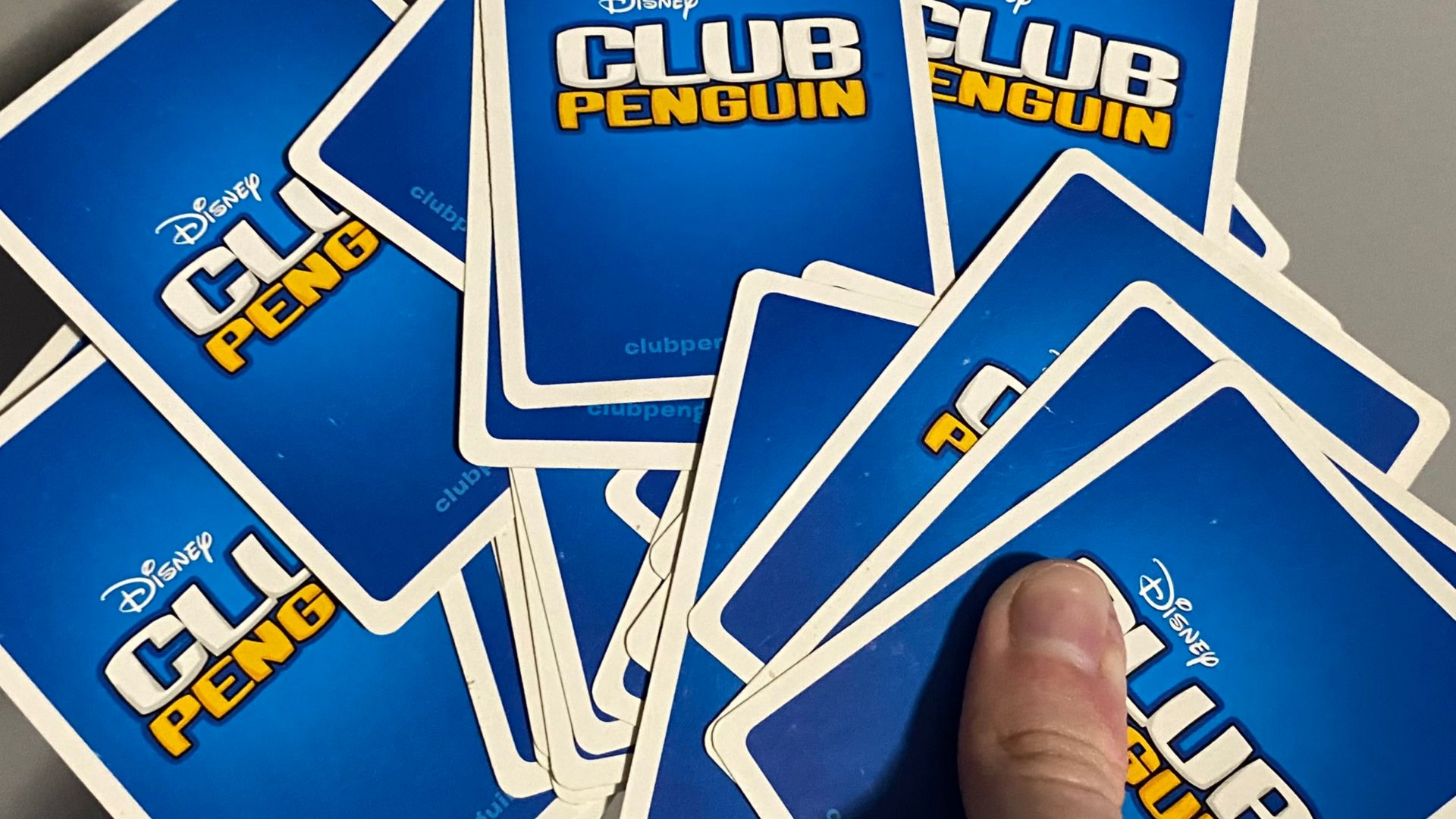
Club Penguin was a massively multiplayer online social virtual world website aimed at children. Club Penguin allowed millions of players to create their own penguin avatar, chat, play minigames, and furnish virtual houses in an arctic, penguin-themed world. Club Penguin was launched in 2005 and went offline in 2017. Club Penguin's history went from a scrappy start-up to an Internet phenomenon supported by Disney to a hard-fought, sluggish downward spiral.
Early Development
Club Penguin started out as an idea in 2004. A small group in Canada had the idea of a safe, kid-friendly virtual world. The company took a lot of its inspiration from their previous experiments, like Penguin Chat 2 and Experimental Penguins. They wrote up prototypes that allowed people to playtest their client and servers. They released various versions of Penguin Chat 3 that were focused on fine-tuning the technology behind the world. Penguin Chat and Experimental Penguins users were asked to participate in beta tests of the game.
The team had their eyes set on a 2010 launch but had a breakthrough and were able to get the first version of Club Penguin out on October 24, 2005. Penguin Chat was shut down four days later, and the world took its place. The game was bootstrapped; it was financed on personal credit cards. No outside investments, no flashy marketing campaigns. But the word spread like wildfire. From fifteen thousand users at launch, the site had 1.4 million by March 2006 and reached 2.6 million users by September. It broke 4 million users by its second birthday and was soon receiving attention from high-profile outlets, with a reputation as a safe, moderated online space for children.
Peak Popularity

Club Penguin's success eventually garnered the attention of the Walt Disney Company, which purchased it in 2007 for $350 million with the potential for additional performance-related bonuses. Disney expanded Club Penguin into a multimedia franchise. The site introduced new characters, narrative threads, and special events, often associated with major Disney film releases. Players hosted or attended parties in pizzerias for films including Frozen, Zootopia, and Star Wars in a rare example of corporate synergy made real for players.
By 2013, more than 200 million accounts had been created. During this period, the site continued to be recognized for its strict moderation, thematic seasonal events, and its growing lore of pirates, agents, journalists, and mythical Puffles. Club Penguin was a testing ground for some children who began socializing online with its safe, playful atmosphere.
Saying Goodbye
 Cornelius Ventures on Unsplash
Club Penguin started to experience a decline from around 2015 due to the rise of mobile gaming and social media. Disney Interactive also went through a restructuring process, with a large number of employees being let go from the Kelowna headquarters and closure of the Brighton office. Other third-party regional versions of the game were also shut down, including the German and Russian servers. A number of mobile apps were also axed in order to focus resources on the main platform.
Efforts to update the game were not well received by fans as player counts began to drop further. On 30 January 2017, Disney announced that Club Penguin would shut down on 29 March to be replaced by its mobile-first successor, Club Penguin Island. Memberships were set to no longer be accepted and refunds were issued, with players taking a bittersweet time to say goodbye to the world they grew up with.
In the final week before its closure, players started to come together. Farewell parties were organized, and for a brief time, attempting to get banned as fast as possible through speedruns became a viral internet meme. Hours before the shutdown, Disney provided every user with a free membership, with all penguins gaining access to various features many of them had never been able to use.