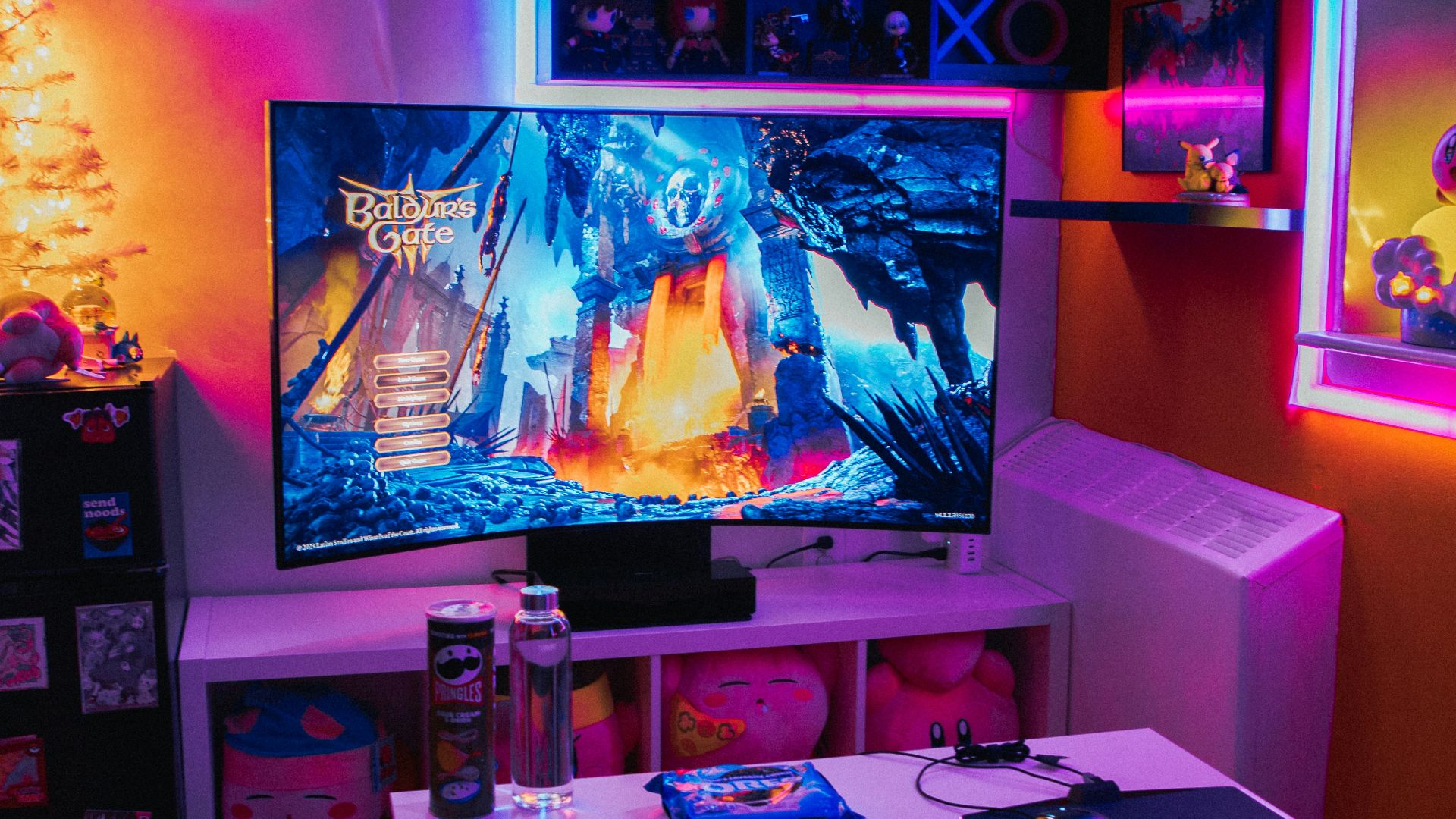
Baldur’s Gate 3 and Divinity: Original Sin developer Larian Studios found itself on the receiving end of a harsh social media backlash earlier this week after announcing that its next RPG, Divinity, will be using generative AI as part of the development process. Fans were quick to applaud the studio’s announcement at first, but the conversation took a turn for the worse when co-founder Swen Vincke clarified that the studio is, in fact, using AI to do some creative work. While some were concerned that AI would be used in place of artists, or that it would somehow lead to the studio cutting corners on its games, Larian is quick to point out that all content in the game is made by people, and that tools are only being used to facilitate work, not be the final say.
How Larian Actually Uses AI
Vincke said the controversy had arisen due to misconceptions about Larian's use of AI. The studio only uses generative AI in the very early pre-production phase in order to make ideas and concepts solid and understandable. The software might be used to extend the detail on a PowerPoint presentation, generate lorem ipsum text, or make quick reference placeholder concept art, but Larian's artists and designers do all final writing, artwork, and design work. Vincke's view is that using AI as a tool to generate raw ideas can be compared to a developer looking at a reference book, searching online images, or pulling stuff from all over the place for inspiration.
AI isn't intended to streamline or replace any part of Larian's creative process. In fact, Vincke said it's more a tool to help creatives brainstorm. An AI image generator, for example, could help an artist explore different compositions and directions for a particular concept, without the AI. Vincke reiterated that Larian does not expect its creatives to be able to manage AI output as part of their role, as they are hired for their talent, not their ability to tweak AI. They can use AI to help them better visualize an idea if they like, but they won't be able to directly use anything the AI generates in the final game.
The Misunderstanding
Larian was unequivocal in their statement, but reactions to the news were anything but. Some fans had read earlier reports as implying that the AI was replacing concept artists or was otherwise being used to an extreme degree in the production process, and the studio received angry responses on social media and gaming forums as a result. A Bloomberg article on the topic had described the studio as "pushing hard on generative AI," with many readers interpreting this to mean that the game's major creative decisions would be offloaded to the AI, which was not the case. The misrepresentation of this point in the Bloomberg article is what led to this misunderstanding of the studio's intentions.
Vincke published a response to Larian's post, also acknowledging the confusion. The post clarifies Larian's position that their AI usage is a micro tool at the idea stage, reiterating that they are not doing away with human art. This position is not a major departure from previous statements that Vincke made earlier this year, in which he elaborated on the studio's policy for using AI in a responsible way, and only in experimental situations. By laying out these details in full, Larian hopes to make clear to fans that its creative process is as human-driven as ever, and that excitement for Divinity comes not from an AI taking the place of human artistry, but instead the opposite.