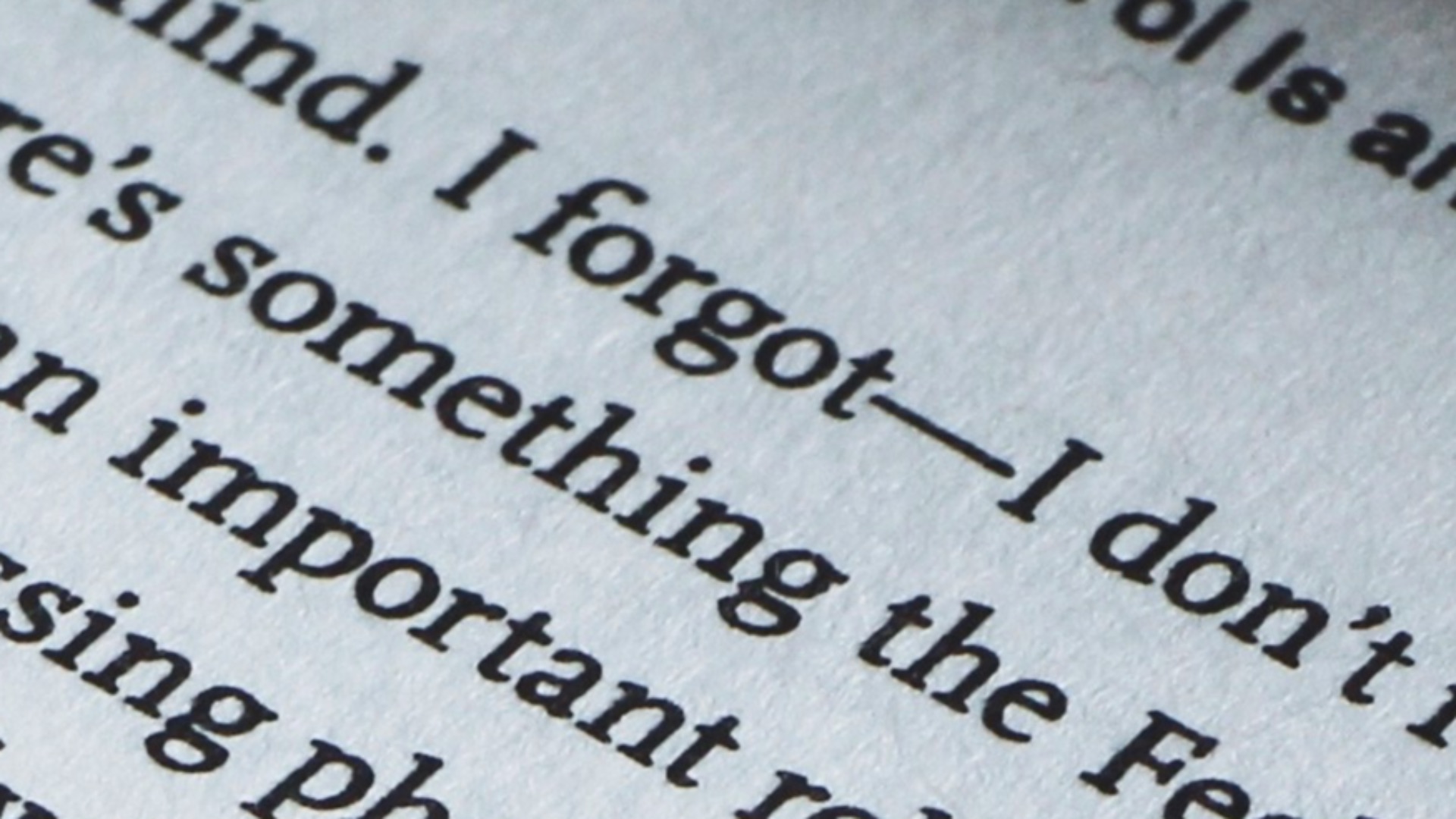
Ah, the em dash. No matter if you're a novice writer or a seasoned one, you're likely more than familiar with this punctuation mark. Before the rise of ChatGPT, you probably used it just as often, too, littering it throughout your paragraphs to sound more sophisticated, highlight emphasis, or add further clarification. Now, though, that habit is largely no more. And it's all because of AI.
But why exactly is ChatGPT—and other AI models—so obsessed with the em dash? And what does it mean for writers if they can no longer use this little, versatile line as often now that it's negatively associated with AI? Let's take a deeper look.
Why the Em Dash?
Sure, there are plenty of beloved punctuation marks out there: the colon, the semicolon, the comma, the ellipsis... The list goes on. But there's something that most writers can agree is fundamentally different about the em dash, and the reason is that there aren't as many rules tied to it. If you want to sprinkle it in between your sentences—like this, for example—you could do so. If you want to emphasize an ending to give it more of a punch, you can do that, too—especially for stylistic reasons. The em dash is fun and versatile, and it's no surprise that AI models like ChatGPT have jumped on the train right from the get-go.
Of course, em dashes can be annoying when overused, but most writers know how to perfect the balance so a piece isn't inundated with too many starts and stops and pauses between thoughts. AI, on the other hand, doesn't know how to master this dance without explicit instruction, which is unfortunately why any text overloaded with these elongated hyphens is often labeled as AI-generated without question. And thus stands the problem.
The AI Voice
Give ChatGPT any prompt, and you'll likely get a response that's filled with these little, letter-M-length dashes. Tell it to stop, and it might, but you'll still probably see a couple slipped in between sentences and words, as if it somehow couldn't help but revert to its usual ways. But that's no surprise. After all, large language models like ChatGPT were trained with massive amounts of human-written data, and because we human writers tend to like writing with em dashes, ChatGPT simply copied the habit.
Because of this, many readers feel like they have a trained eye: they usually can "tell" right off the bat which pieces were written by AI, purely by spotting the use of em dashes. Oddly quirky metaphors and short, choppy sentences can also be telltale indicators. It certainly has made writers, especially those who have a similar writing style to the kind described, extremely wary. And weary.
While there's no hard and fast rule that says people should avoid using AI to craft emails and blog posts, there's another problem: if we all use the same artificial intelligence platforms to generate our content, wouldn't we all start sounding alike? How would we differentiate one voice from another?
The End of an Era
No one wants to be accused of using generative AI to write their work, especially when said work was completed solely by an author's own efforts and research. But alas, in this ever-evolving digital era, people are starting to shift their writing voice and adopt different styles—all because they don't want to be lumped together with AI.
For some writers, they've even debated whether it's best to leave in typos or slash out metaphors in order to sound more human. Some students have even expressed concern: they like using em dashes, but feel they can't include them in their writing anymore because they're afraid of looking like AI. Others, however, are stubbornly forging on—AI will never pry away the writing quirks they've used all their lives.
But for most, maybe this is the end of an era. To preserve our identity in this changing world, we have no choice but to adapt by letting AI take what we've loved and known and sprouting anew in other ways. That might mean giving up the em dash altogether (en dash next, anyone?). That might mean switching up our stylistic choices and tinkering with our phrases in different, novel ways. At the very least, even if AI knows how to mimic us perfectly, even if it takes away our em dashes, it'll never be as creative or as original as we are. We'll always find a way to reinvent.