Nintendo's legendary attention to quality control cuts both ways. On one hand, it has produced some of the most polished games ever made. On the other, it has buried an enormous amount of fascinating, unfinished, and occasionally brilliant work deep inside cartridge data, development builds, and corporate archives. Every finished Mario game you have ever played is a survivor. Dozens of levels, enemies, and entire design directions did not make it.
Most people who know Mario's history know the obvious stories: the Japanese Super Mario Bros. 2 that was deemed too difficult for Western audiences, the Warp Zones, the World 9. What gets far less attention is everything that never shipped at all, the content that ended up either locked in game data, quietly discovered by hackers and data miners, or revealed only through the kind of enormous corporate leak that Nintendo would very much prefer had never happened.
What the Gigaleak Told Us About Super Mario 64
The clearest window into Nintendo's cutting room floor opened on July 25, 2020, when a massive dump of internal Nintendo data landed on the internet and immediately became known as the Gigaleak. The leak included a portion of Super Mario 64's source code, featuring a large number of early and unused assets, with some content appearing to date as far back as 1995. For a fanbase that had spent decades speculating about the game's development, it was like finding a time capsule.
Thirty-two courses were initially planned for Super Mario 64, but only 15 of them made it into the final product. That is not a small trim. It is nearly half the intended game gone, and what survives in the code offers tantalizing glimpses of what was lost. Super Mario 64 has 38 levels referred to within its level select, where seven are completely empty and go unused. Some of these appear to be test maps from early development, while others look like genuine level ideas that ran out of time or failed to fit the design direction the team was building toward.
The leak also confirmed years of fan speculation about Luigi. Luigi's absence from the final game and the mystery surrounding a supposed multiplayer mode had captivated fans for years. Recent discoveries shed light on the possibility of a split-screen co-op experience where one player controlled Mario and the other Luigi, with unfinished code found within the game's data hinting at this mode. The developers ultimately had to choose between more elaborate levels and Luigi, and Luigi lost. Multiplayer Mario 64 with a proper second player was real, was developed, and was quietly set aside.
The Levels You Can Only Access With Cheat Codes
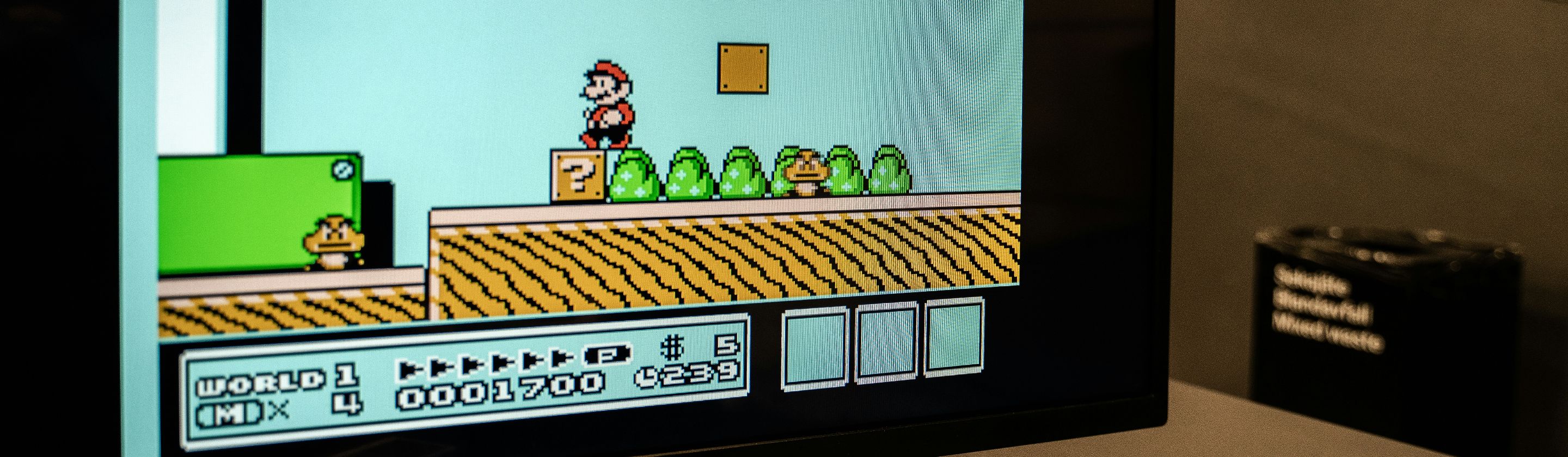
Super Mario Bros. 3 is routinely listed among the greatest games ever made, and its final level design represents years of iteration. What The Cutting Room Floor, a research wiki dedicated to documenting unused game content, has been cataloguing for years is the version that did not survive that iteration. An unused level planned for World 6 was removed completely from the final game. It features many Cheep-Cheeps and Fire Chomps, and the entire level moves up and down. A pointer to this level still exists on top of the START tile in World 1, suggesting Nintendo placed a level tile there during development to quickly test new levels.
There are also multiple unused Tanooki Suit bonus rooms sitting in the game's code, presumably placed there as a quick way to test bonus room layouts before putting them in the game. These rooms are still technically accessible through Game Genie codes, which means the data is fully intact, just never surfaced under normal play. Other unused levels found in the code include a vertical swimming stage with no enemies and no proper exit, and a flying level featuring a green Para-Beetle variant that went completely unused in the finished game.
The existence of these levels raises an interesting design question. Nintendo clearly built a great deal more content than it shipped, and the stuff that got cut was not necessarily worse than what survived. Some of it just did not fit the pacing or the world structure. The Super Mario Bros. 3 that reached players in 1990 was already enormous by the standards of its era, and yet it represents the edited-down version of something even larger.
The Japan-Only Sequel That the West Never Got
The most famous case of a lost Mario game is not hidden in data at all. It is just sitting in plain sight, mostly overlooked outside of dedicated gaming communities. Super Mario Bros. 2 was released in Japan in 1986 for the Family Computer Disk System as a direct sequel to the original, using a slightly altered engine with new features, different enemy behavior, and significantly more challenging levels. Nintendo of America deemed it too difficult and too similar to the original to sell well in Western markets.
What Western players received instead under the Super Mario Bros. 2 name was a reskinned version of a completely different game, Yume Kōjō: Doki Doki Panic, with Mario characters dropped in. The actual sequel, full of poison mushrooms that hurt rather than help and wind that could knock Mario into pits, did not reach Western audiences until the Super NES collection Super Mario All-Stars in 1993, by which point it was rebranded as Super Mario Bros.: The Lost Levels. By then, most players had already formed their entire understanding of what a Mario sequel looked like around something that was never really Mario at all.
That gap between the game Japan got and the game the rest of the world received shaped the franchise's Western identity for years. The plucky, varied, four-character design of Doki Doki Panic became what people assumed Mario sequels would look like, affecting expectations all the way through to Super Mario Bros. 3 and beyond. Nintendo's decision to protect Western audiences from a game it thought was too hard quietly rewrote what we thought Mario was.