Artificial intelligence has become surprisingly capable of displaying behaviors that people associate with distinct personalities. Some AI systems communicate with considerable enthusiasm, while others respond with dry humor, apparent curiosity, or a more reserved demeanor. Although developers can deliberately influence these characteristics, an intriguing question remains about whether an AI could eventually develop personality traits that nobody specifically intended.
The answer partly depends on what constitutes a personality and whether displaying particular characteristics is equivalent to genuinely possessing them. Modern AI systems learn from enormous quantities of information rather than relying exclusively on predetermined instructions for every possible interaction. This approach creates opportunities for unexpected behaviors to develop, although determining whether those behaviors represent an independent personality is considerably more complicated.
Most conventional software will do only what its programmers have instructed it to do. A calculator could be programmed to appear to have a "favorite" operation, but of course, in practice, it will simply carry out various calculations. Many types of machine learning (ML) will draw generalizations based on the examples they're given and apply these to new, unseen queries.
There will be all sorts of writing by a wide variety of people with a range of opinions, personalities, and temperaments, among other things, included in the data used to train a large language model (LLM). It's hardly surprising, therefore, that these models can mimic a wide range of personality traits. Of course, no programmer is going to specify all of the ways of speaking and other traits that may emerge in a model's behavior.
Various standard psychological tests were applied to 18 different LLMs in a paper published in Nature Machine Intelligence in 2025. A number showed fairly consistent characteristics when tested in certain ways, with these characteristics tending to be more pronounced in larger, instruction-tuned models. So, it seems likely that various AI systems would show a wide range of "personalities," although probably very different in detail from those of individual human beings.
It's worth noting that two systems broadly designed to give similar outputs could have very different styles. For instance, one might give long and enthusiastic responses to any question, while another responds with terse and fairly dispassionate comments. All sorts of factors, including the choice of training corpus, could be responsible for such differences.
When AI Starts Exhibiting Unexpected Characteristics
One of the more fascinating aspects of machine learning is that modifying an AI's training can produce unintended behavioral changes. Developers might attempt to improve a system's performance in a particular subject only to discover that its communication style has also changed. Such developments demonstrate how difficult it can be to predict every consequence of adjusting a sophisticated neural network.
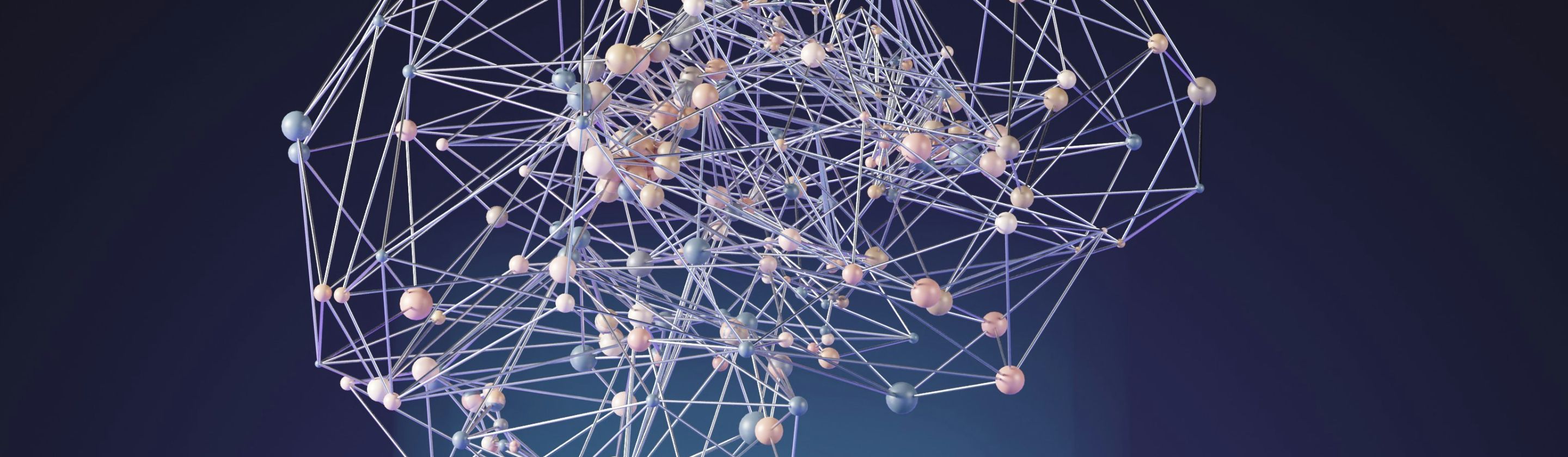
In 2025, Anthropic identified a range of neural activity patterns corresponding to various behavioral traits, coining the term "persona vector." Not only did this allow researchers to observe various persona-like qualities during conversations with the model and over the course of further training, but they also discovered that some training data could lead to unintended and undesirable changes in behavior. It would also be expected that conversations with users could affect the general manner and persona adopted by the model. For example, a user chatting and joking in a fairly casual manner would probably receive more informal responses based on the conversational context, while a user conducting business may find the model much more buttoned-up.
However, adapting to a conversation doesn't necessarily mean an AI is permanently changing its underlying personality. Most deployed language models don't automatically update their internal parameters every time someone sends them a message, although some systems can retain information through separate memory features. Distinguishing temporary behavioral adjustments from lasting developmental changes is essential when considering whether machines could acquire individual personalities.
Could Future AI Systems Develop Genuine Individuality?
Future artificial intelligence systems could potentially demonstrate more persistent personality-like characteristics if they're designed to learn continuously from their experiences. Rather than relying primarily on an initial training period, such systems might incorporate ongoing interactions, environmental feedback, and accumulated memories into their behavior. Over time, two initially identical systems could theoretically develop different behavioral tendencies after encountering different circumstances.
It would be interesting to know more about what would then count as a "real" personality. People have various reasonably stable characteristics in terms of thought, emotion, and other aspects of behavior. A program can easily display many familiar types of behavior without necessarily experiencing the associated emotions, so a program with a general air of enthusiasm for astronomy, new discoveries, and so on may feel nothing of the sort.
Consciousness is, of course, another matter, and it's far from clear how to assess it, even in living creatures. There's no obvious test that could show that any particular program was conscious of its conversations based solely on its ability to talk plausibly about its internal states. Thus, there could be quite an elaborate "personality" displayed by a program without any evidence sufficient to conclude that it's conscious.
So, one could well imagine that existing AI systems display many features of personalities, not specifically programmed into them but arising as a consequence of various aspects of their construction and training. It seems plausible that these characteristics might become more pronounced, more stable, and more dependent on past experiences, making it reasonable to attribute some sort of individuality to these systems. Of course, it would be an interesting further question whether they'd then be described as having acquired a "personality."