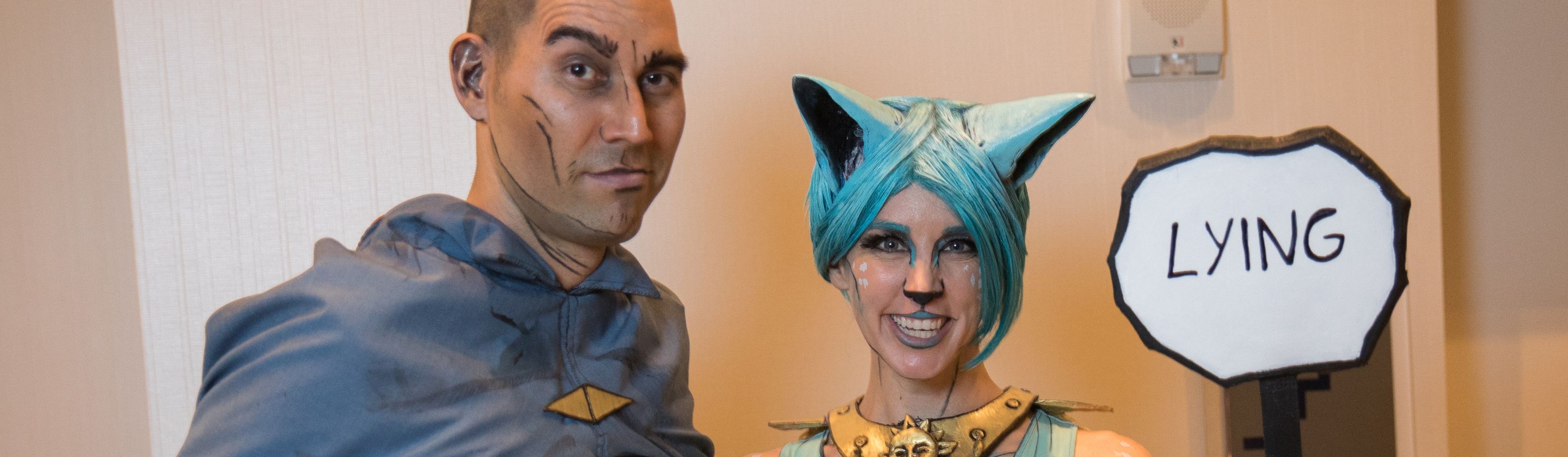
Writer Brian K. Vaughan and illustrator Fiona Staples created the epic space opera/fantasy comic book series Saga, which Image Comics publishes every month. Often described as "Romeo & Juliet meets Star Wars," this genre-blending masterpiece follows star-crossed lovers Alana and Marko.
Join us as we uncover more about this comic book gem that seems to have flown under the radar of the mainstream and why you should be reading it.
A Space Opera That Defies Convention
What sets Saga apart isn't just its premise—it's the execution. Vaughan creates incredible characters with only a few well-placed lines of dialogue and Staples' artwork. They feel real: their personalities rounded and their interactions believable.
When the dark universe of Saga comes to take them away, you feel the impact. The narrative weaves between intimate family moments and galaxy-spanning conflicts, proving that the personal is always political, especially when your love is considered an act of treason by both sides of an interstellar war.
Artistic Excellence That Transcends The Medium
Fiona Staples' art is nothing short of revolutionary. Her immersive world-crafting is richly detailed and well-considered, her character designs produce some of the best aliens available, and the roomy layouts keep the emphasis firmly on the human aspect despite the chaotic universe they live in.
Staples has a bold and colorful style that clashes delightfully with the dark twists of the story. From television-faced robots to adorable seal-men with violent pasts, her imaginative designs have created some of comics' most memorable characters. The series's visual storytelling is so powerful that certain moments, like Alana fiercely defending her daughter's perfection at gunpoint, could only achieve their emotional resonance in comic form.
Why Saga Outshines The Superhero Universes
While Marvel and DC dominate mainstream consciousness, Saga has quietly amassed critical acclaim that most superhero titles can only dream of. The series has garnered multiple Eisner Awards, Harvey Awards, a Hugo Award, a British Fantasy Award, a Goodreads Choice Award, a Shuster Award, an Inkwell Award, a Ringo Award, and more.
By letting Saga center around very human, very messy and chaotic lives of its core cast, the series has intriguingly come to life. Unlike traditional comics with neatly packaged story arcs, Saga mirrors life itself—events spill into each other, relationships evolve naturally, and sometimes storylines fade without resolution, just like in reality.
Most importantly, Saga deals with just about every dark theme imaginable, including genocide, child abuse, miscarriage, and addiction. Yet it balances this darkness with humor, tenderness, and hope. These are people we come to care deeply about.
The series refuses to shy away from difficult conversations about war, family, identity, and what it means to build a life worth living when the entire universe seems determined to tear it apart. Through Hazel's narration from the future, readers experience the story with the bittersweet knowledge that she survived to tell it, adding layers of poignancy to every dangerous moment her family faces.
It is now halfway through its planned 108-issue run, making this the perfect time to discover why Saga isn't just the best comic series but a landmark achievement in storytelling that will be celebrated long after the last superhero has hung up their cape.