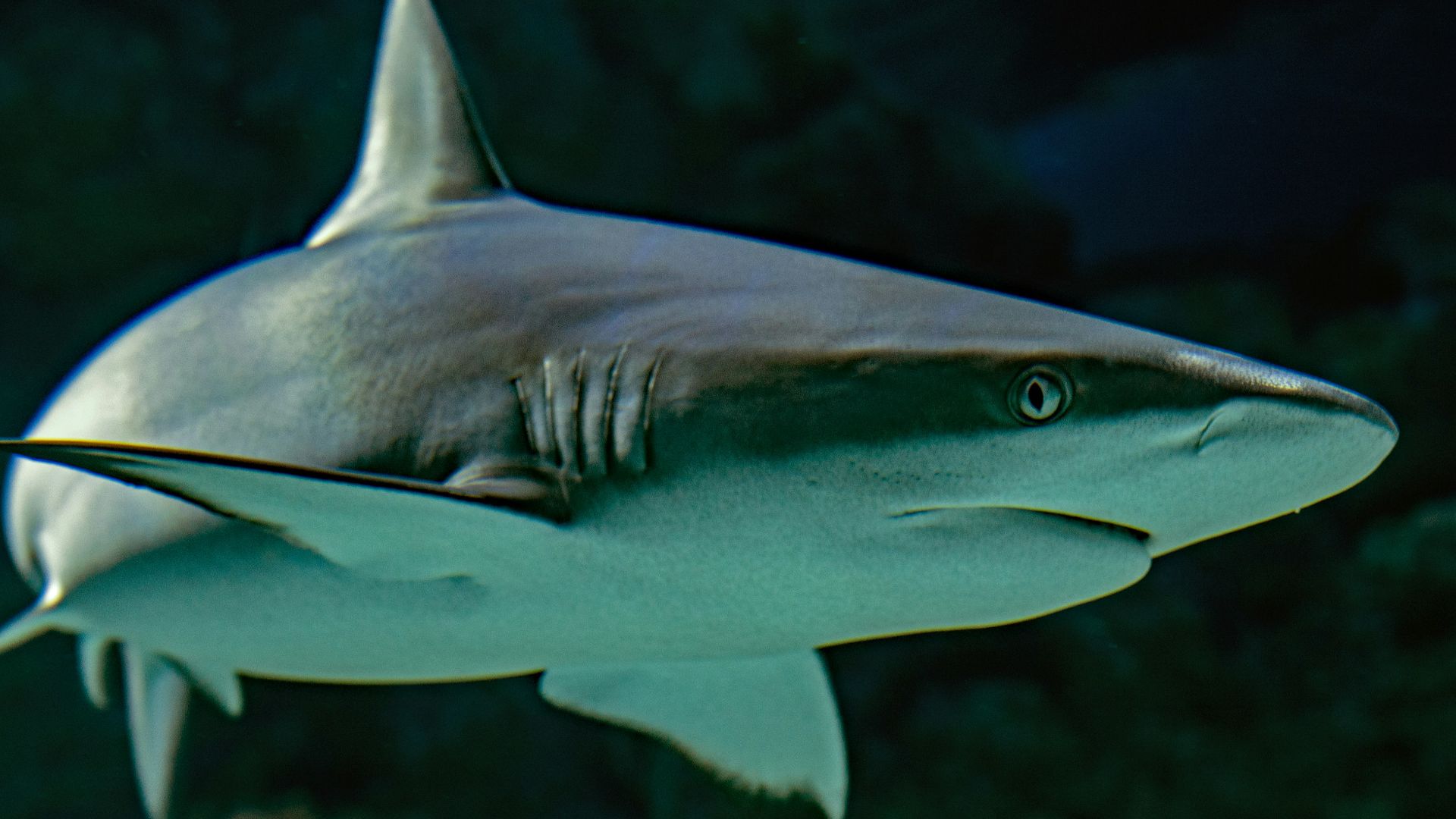
In the early days of the digital age, a single photograph emerged that seemed to capture a terrifying, cinematic moment of man versus nature. You likely remember the image of a British Royal Navy diver dangling from a helicopter ladder while a massive Great White shark lunged out of the water directly beneath him. It was a breathtaking composition that appeared to show a near-death encounter in the middle of a routine rescue exercise. The picture traveled through email chains and message boards long before the era of high-speed social media feeds began.
The photo really hit people in their primal fears of dark oceans and the monsters that lived there. Because many people were unfamiliar with photo editing software at the time, what they saw was believed to be undeniable proof. You probably felt a jolt of adrenaline just looking at the sheer scale of the shark compared to the vulnerable human hanging in the air. It was a perfect piece of "too good to be true" media that managed to bypass the logical filters of millions of internet users.
The Anatomy of a Digital Composite

Magazine editors claim that when they saw the photo, it appeared as though it had been taken by a lucky Nat Geo photographer during an incredible assignment. In truth, it was an excellent digital manipulation of two different photos spliced together. The helicopter belonged to an exercise taking place near San Francisco’s Golden Gate Bridge, while the shark was photographed in South Africa. Study the lighting and water displacement, and you will never see the edit without a Photoshop detector. The hills were really Java headlands stitched into one frightening continent.
Photographer Charles Maxwell had originally taken the shark photo while on an assignment to document apex predators in the wild. The Great White was actually jumping toward a fake seal placed behind a boat thousands of miles away from any dangling sport pilots. Many viewers did not notice that the angle was distorted just enough to make the shark look larger than life. The composition was designed so that, once the chaotic brutality of the scene was absorbed, the eye would slip past dropped shadows and pixelated details.
Experts eventually debunked the image by clarifying that the helicopter onboard belonged to an HH-60G Pave Hawk flight class. The type of helicopter used would most likely not be in the same ocean as that particular species of shark. Detail-oriented users also picked up on the fact that the rotor spray from the helicopter did not push or pull away from the shark’s colossal jump out of the water. If this were a real-life situation, the force of the helicopter blades pressing down would distort the entire top layer of the ocean around the shark. Photo composites do not interact with their new environments; something most people missed while the hoax spread like wildfire.
The Reach of a Pre-Social Media Viral
The "Helicopter Shark" did not need an algorithm to reach every corner of the globe; it relied on the manual power of the "forward" button in inboxes. It became so notorious that it even ended up in the mailboxes of high-ranking military officials and professional photographers who debated its legitimacy. You might find it hard to believe now, but the image was so convincing that it was even nominated for "Photo of the Year" by some organizations before the truth came out. It proved that a compelling story could travel much faster than the boring reality of a bored graphic designer.
National Geographic eventually had to release a formal statement to debunk the claim that they had awarded it any prestigious honors. They clarified that the image was a total fabrication and used it as a teaching moment about the burgeoning world of digital misinformation. Even after the official debunking, many people continued to believe the photo was real because they wanted the story to be true. It is a fascinating look at how the desire for spectacle can often outweigh commitment to factual accuracy when presented with a stunning visual.
The mystery of who actually created the image remained unsolved for a while, adding to the lore of the "Helicopter Shark" across the web. It was not until much later that it was revealed as a harmless experiment in photo editing rather than a malicious attempt to deceive the public. This transition from a simple artistic test to a global phenomenon highlights the unpredictable nature of how content is consumed by the masses. The image remains one of the most shared files in the history of the internet, serving as a digital time capsule of early online innocence.
Looking back at this shark-themed deception, it becomes clear how it laid the groundwork for the skeptical way the internet is viewed today. It taught that a single, powerful image can be more influential than a thousand words of factual reporting or dry scientific data. The "Helicopter Shark" can now be used as a reminder to always check the source before clicking the share button on a sensational post. The legacy of that floating diver and the hungry shark is a permanent reminder of how easily human perception can be tricked by a skilled editor.