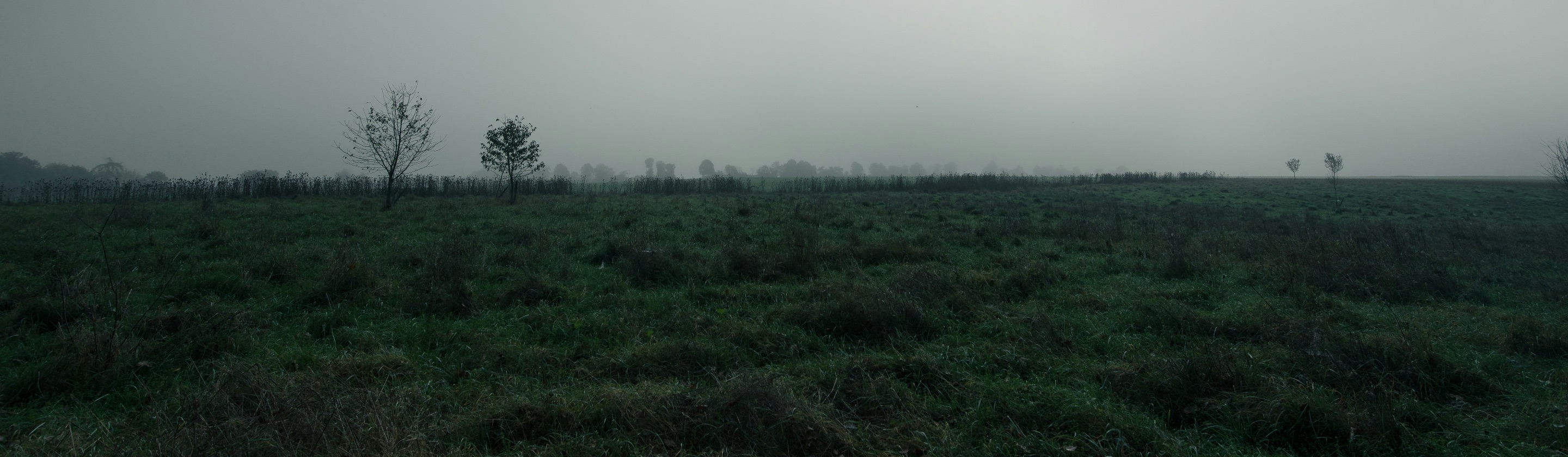
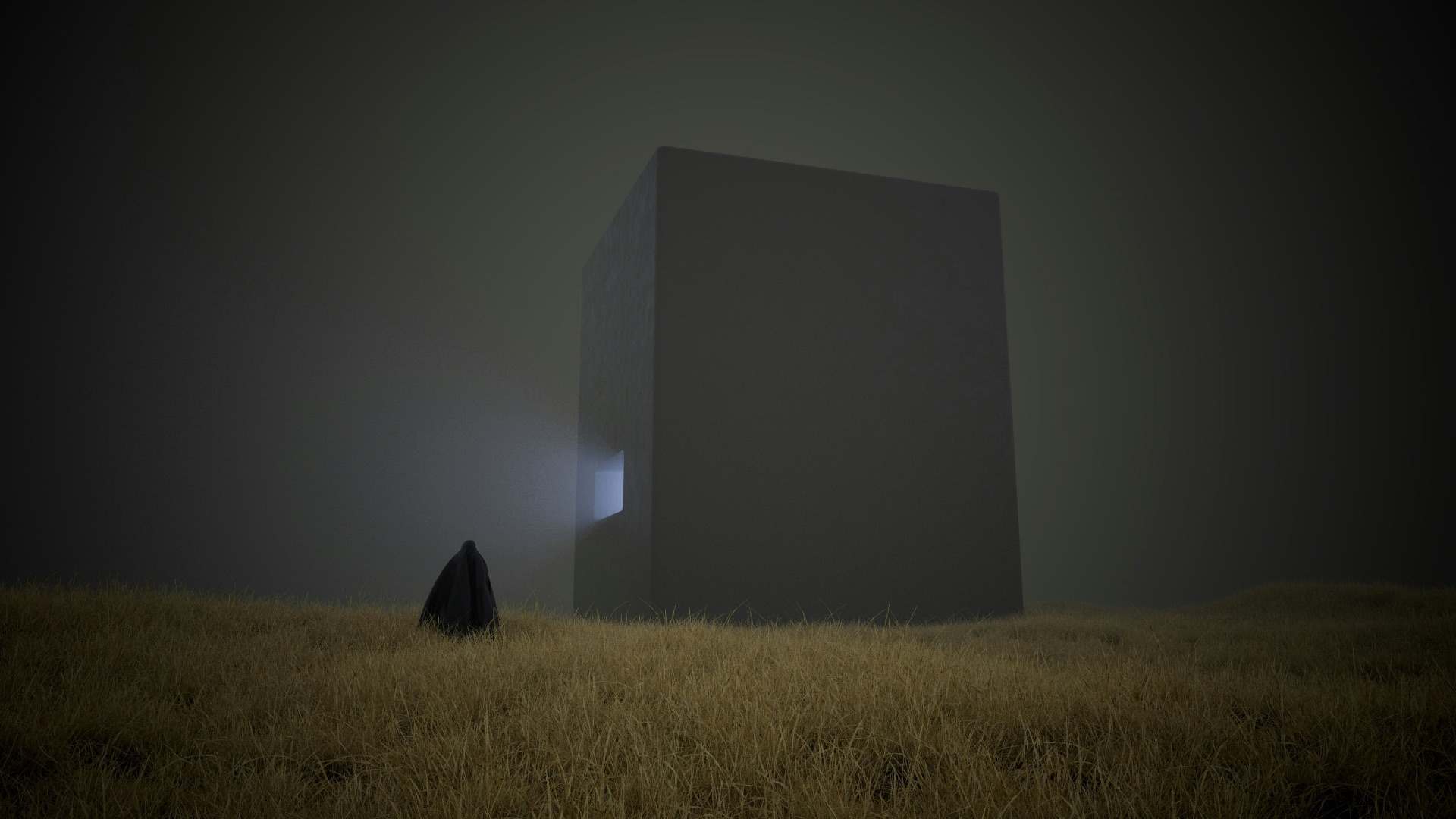
You're dropped into a vast, open field with no instructions and no clear objective. The lighting is off somehow, washed out and too bright in places, like someone cranked the exposure until the color drained from everything around you. Low, blocky buildings sit scattered across the terrain, and the grass stretches out in every direction without a single landmark to orient yourself by. There's no music, no dialogue, and no indication of what you're supposed to do next, just the quiet crunch of your own footsteps and the nagging sense that you're not actually alone out there.
That unsettling sense of isolation is exactly why Station.exe has stuck around in horror gaming circles for well over a decade now. It's not a polished commercial release with jump scares and a marketing budget; it's a rough, homemade Blender project that surfaced on 4chan's /x/ board in 2013 and never came with an explanation. Nobody has ever confirmed who built it, why they built it, or what they meant for players to take away from it, and that void is precisely what turned a clunky student-looking project into a genuine internet mystery.
What Station.exe Actually Is
At its core, Station.exe is a short first-person exploration game built in Blender (supposedly in version 2.67, which was the latest version at the time), which places its creation firmly in 2013. There's no combat, no inventory, and no dialogue trees; you simply walk through an open, overexposed landscape dotted with plain gray structures that look more like architectural placeholders than finished buildings. The overall effect isn't jump-scare horror so much as a persistent, low-grade wrongness, the kind that makes you want to quit but also keeps you clicking forward anyway.
The game does have one real threat, though. A large, bulbous face trails the player through the field, one that some players have compared to looking like that of Thomas the Tank Engine, and getting caught by it ends the game outright. That pursuit mechanic is really what turns Station.exe from a strange walking simulator into something closer to a survival scenario, since you're forced to keep moving through unfamiliar terrain while something is actively closing in behind you.
The chase aside, part of what makes the game so disquieting is how empty everything else feels. While you're not thrown into a pitch-dark field, your surroundings are still washed out of their details in a way that makes distant shapes hard to identify until you're uncomfortably close to them. Combined with the total silence, aside from a couple of unsettling audio files buried in the game's data, the experience plays more like wandering through a half-finished dream than a traditional horror title.
Those audio files matter more than they might seem at first glance. Two sound clips extracted from the game's files carry Russian-language titles, one of which translates roughly to "sound" and the other referencing a "strange sound in Kyiv," dated October 2009. This detail lines up with another oddity people noticed early on: the game's map isn't invented at all. According to the archive listing hosting the game, the setting is modeled on a real location in Russia's Mirninsky District, which only deepens the sense that something real got folded into something fictional.
The Disk with No History
The origin story attached to Station.exe reads like a creepypasta by design, and that's part of why so many people remain skeptical of it. According to the original 4chan thread where the game first appeared, an anonymous poster claimed his father had picked up a CD case at a tech expo in Rochester, New York, years earlier. The case supposedly held two disks, one loaded with ordinary engineering software and a second, unlabeled disk that turned out to contain the game itself.
That framing gives Station.exe its found-footage quality, but there's no way to verify any part of it. No expo records, no vendor, and no second source have ever surfaced to back up the claim, which means the entire backstory rests on one anonymous post from over a decade ago. Even the file itself doesn't offer much closure; when users decompiled the game into its original .blend format, they found file paths referencing a folder belonging to a user (supposedly) named "miz," along with basic movement and mouse-look scripts, but nothing resembling a name, a studio, or a message.
Adding to the confusion, a site called semperprotinam.com became closely associated with hosting copies of the game for years, leading many people to assume it was somehow connected to the game's creation. The site's own operator has publicly denied that connection on multiple occasions, explaining in 4chan discussions that the files were only uploaded to prevent the game from becoming lost media entirely. In other words, even the people preserving the game don't know where it actually came from, which has only made the trail colder over time.
The Theories That Won't Go Away
With no confirmed creator, the internet did what it always does and filled the silence with speculation. One recurring theory suggests the game was an abandoned student project, an ARG (alternate reality game), or a Blender learning exercise that someone uploaded almost as a joke, never expecting it to take on a life of its own. This would explain the placeholder-style buildings and the total absence of narrative content; it looks, in a lot of ways, like an unfinished tech demo rather than a deliberate horror experience.
A second theory leans into the Russian audio clips and the real-world map location, with some players speculating that the developer had personal ties to that region of Siberia and simply recreated a familiar landscape without any grand intention behind it. Others have taken this further, floating the idea that the game was meant as a kind of digital memorial or personal artifact rather than something built for an audience at all. Neither theory has any documentation behind it, but both keep resurfacing whenever the game gets rediscovered by a new wave of players.
There's also a more skeptical camp that treats the entire backstory, disk and all, as an elaborate piece of creepypasta lore layered on top of an otherwise unremarkable indie project. This group points to how well the Rochester disk story fits the classic "found media" horror formula, complete with an unreliable secondhand source and a conveniently untraceable origin. A Reddit thread in r/creepygaming dedicated to the game shows this divide clearly, with commenters split between treating it as a genuine oddity and dismissing the mythology as fan-made embellishment.
Why the Mystery Still Compels
What keeps Station.exe relevant isn't just the eerie gameplay, but the sheer amount of unanswered questions still surrounding something this small and this old. A rough, wordless walking simulator from 2013 shouldn't still be generating discussion threads and decompiling projects over a decade later, yet it is, largely because nobody involved in its creation or its early spread ever stepped forward to explain themselves. Between the untraceable disk story, the real Siberian coordinates, and the Russian-language audio files, there's just enough verifiable strangeness mixed in with the unverifiable legend to keep the case open. As long as that gap between fact and story stays unresolved, Station.exe will likely keep pulling in new players curious enough to wander that empty field themselves.