
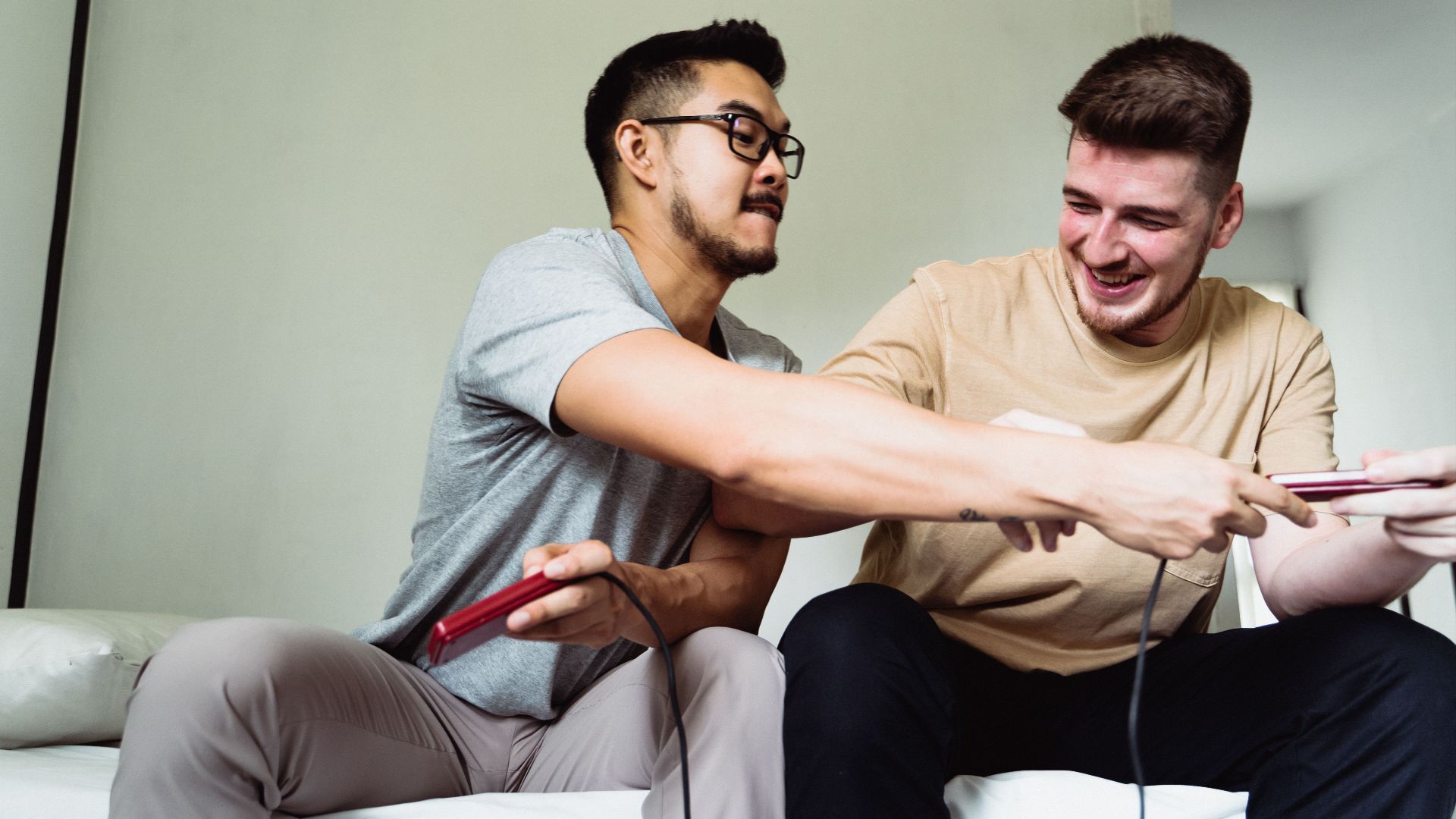
Four friends are sitting on a couch trying to run a kitchen together. Food is burning on the timer’s last few seconds, and everyone is shouting instructions that nobody seems to be following. They’re all on the same team, but you’d never know it from the arguing. It’s cooperative multiplayer, supposedly the friendliest way to play a game, and somehow one of the easiest ways to start a fight.
Cooperative games tend to leave people feeling better about each other than competitive ones do, so the couch scene shouldn’t happen. But competitive games give you an opponent to blame when things go wrong. In cooperative games, there’s no opposing team, so that frustration can end up directed at the friends sitting right beside you.
What The Research Found
Researchers at Ohio State ran a pair of studies on this question. In the first, 119 college students played Halo II in pairs, some head to head and some working through the campaign together against the computer, while a control group filled in the measures without playing anything. Every pair then played a game with dimes they could keep or hand over, a cheap way to measure whether people had warmed to each other.
The pairs who had cooperated shared more. They fell into tit-for-tat reciprocity more readily than the pairs who had competed against each other, and their measured aggression came out lower in places. Cooperation on screen carried over into a situation where cooperating cost them money. The competitive pairs did come around in later rounds, though it took them longer to get there.
In a second study, eighty students played Unreal Tournament III alongside a partner wearing either an Ohio State shirt or a University of Michigan one. The partner was a member of the research team, and the shirt was there to signal which side they were on. Playing as teammates cut aggressive thoughts and wiped out the effect of the rival jersey. Competitive players matched against a rival were less aggressive afterward than competitive players paired with their own side. If a shared goal can erase that kind of hostility, friends on the same couch playing for the same score should be the safest arrangement in gaming.
Why The Co-op Mode Is The Dangerous One
A competitive mode hands you an opponent. Your loss is somebody else’s win by design, and the structure absorbs the resentment on your behalf, because complaining about the person who just beat you is built into the arrangement. You agreed to all of it when you picked the mode, and so did everybody else in the game.
Cooperative play strips all of that out. Failure belongs to the group, and in a kitchen running on a clock the cause is usually visible to everyone holding a controller. Somebody didn’t pass the plate or put the wrong thing in the pan, and nobody had to guess who. By the time anyone opens their mouth, the game has already assigned fault.
Reciprocity runs in both directions. It’s what made the cooperative pairs in the dime game generous, since each kind move invited another one. The same mirroring applies to a sharp comment. One player snaps and the next one snaps back, and within a few rounds a team that was getting along is trading blame on every failure. Nobody in that kitchen is trying to lose, which is part of why it stings.
The Game With The Reputation
Overcooked has earned a reputation for turning friendly game nights into that kind of spiral. Everyone works together to prepare meals and serve customers, but keeping the kitchen running requires more teamwork than most players expect. The frustration has even earned the series a nickname among Chinese players. According to PC Gamer, they call it The Divorce Kitchen, a name that came from frustrated players rather than the developers.
The studio has given up arguing with its own reputation. Co-director Oliver De-Vine introduced their next project by saying that Overcooked broke you apart and the new one exists to put you back together. De-Vine still defends the original, noting that there is nothing wrong with a fun argument among friends, while the team talks about wanting to be a constructive and positive force. It’s an admission with a caveat attached. The arguments happened, and the studio doesn’t think they were all bad.
Their follow-up is a two-player puzzle adventure, and it rewards talking over controller precision. The single-button control scheme carries over from the kitchen games. Designer Phil Duncan points out that players who discuss levels outperform silent ones, so the new design makes conversation the whole point. Puzzles get solved verbally, with no inventory screen or notepad to retreat into. The game also runs split-screen even in online play, so each player can see a mistake as their partner makes it, long before it turns into a burnt dish and an argument.