Why Teleportation is Actually Horrifying & Should Never Exist
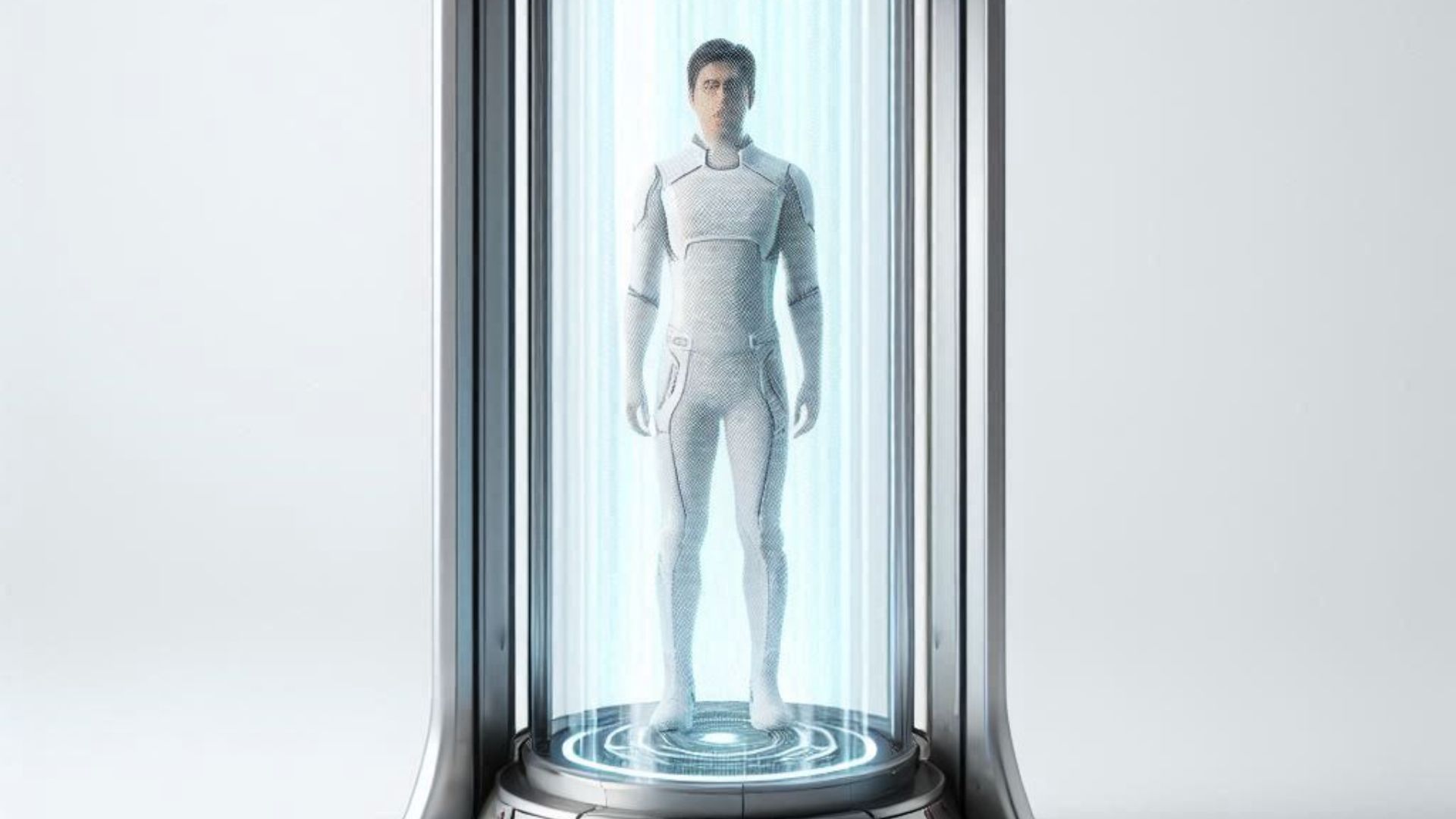 Bing Image Creator on Wikimedia
Teleportation sounds like one of those inventions that would instantly make life better. You could wake up in New York, have lunch in Paris, and be home before dinner without ever seeing the inside of an airport. Traffic jams would disappear, long-distance relationships would become much easier, and nobody would have to spend six hours sitting beside a stranger who keeps stealing the armrest.
Unfortunately, the moment you start thinking about how teleportation might actually work, things become considerably less appealing. Moving a human being instantly from one location to another raises uncomfortable questions about death, identity, privacy, crime, and what exactly counts as "you." Suddenly, a two-second commute doesn't seem worth the existential crisis.
Teleportation Might Basically Kill You
Most fictional teleporters quietly avoid explaining what happens to your original body, which is probably for the best. One theoretically imaginable system would have to record the physical state of your body, destroy or disassemble it, transmit the necessary information elsewhere, and create another version of you at the destination. From everyone else's perspective, you walked into one machine and walked out of another.
From your perspective, however, things get much more complicated. If the person arriving at the destination has your memories, personality, appearance, and beliefs, everyone may accept that you're still alive. But the original version of you was nevertheless destroyed, raising the disturbing possibility that the machine didn't transport you at all. It simply killed you and created an exact clone.
Imagine refusing to destroy the original person after producing the copy. You'd suddenly have two people who both remembered entering the teleportation machine and sincerely believed they were the original. Neither could easily be dismissed as fake because both would possess exactly the same history up until the moment of duplication.
That creates a problem technology can't neatly solve: personal identity may not simply be a matter of copying information. Your consciousness feels continuous because you experience one moment flowing into the next. Whether that experience could somehow transfer between two physically separate bodies is something science can't currently demonstrate.
The Security Problems Would Be Terrifying
Even assuming teleportation didn't accidentally become the world's fanciest execution device, the infrastructure required would create enormous security concerns. A machine capable of reproducing a person would presumably have access to extraordinarily detailed information about that person's body. Someone, somewhere, would need to make sure that information couldn't be stolen, copied, manipulated, or stored without permission.
A software error would also carry much higher stakes than your laptop freezing. If the system incorrectly reconstructed part of your body, there wouldn't necessarily be an easy way to undo the mistake. Even tiny errors become alarming when the object being reconstructed is a functioning human brain rather than a corrupted vacation photo.
Hackers would present an even stranger threat. Instead of stealing passwords or credit card numbers, someone might theoretically interfere with destinations, prevent reconstruction, or alter whatever information the machine uses to rebuild passengers. Cybersecurity suddenly becomes considerably more serious when getting hacked could mean arriving without all the pieces you started with.
Teleportation could also transform physical security. Borders, prisons, military bases, banks, and private homes currently depend partly on controlling how people move through physical space. If someone could instantly appear inside a restricted location, locks, fences, and guarded entrances would become far less useful unless teleportation itself were tightly controlled.
Society Would Have Some Very Strange Problems
Transportation industries would change almost overnight if teleportation became inexpensive and widely available. Airlines, passenger rail systems, taxi services, shipping companies, and potentially huge portions of the automobile industry could face dramatic disruption. That might sound exciting until you remember how many jobs and businesses depend on physically moving people and goods.
Cities could change just as dramatically. If you could live anywhere and teleport to work, proximity would suddenly matter much less, potentially reshaping housing markets and commuter communities. A person could technically live thousands of miles from their office while still arriving every morning at 9:00.
Governments would also have to decide who gets to use teleportation and under what circumstances. Passports and customs inspections become difficult when travelers don't pass through airports or border checkpoints. Countries might require teleportation terminals to verify identities and destinations, creating an enormous international monitoring system simply to keep track of who is appearing where.
Then there's the unavoidable question of cloning. If a teleporter can reconstruct one human being from stored information, why couldn't it reconstruct that person twice? A technology invented to eliminate your commute might accidentally give humanity the ability to duplicate people, creating messy questions about citizenship, relationships, inheritance, employment, and legal responsibility.
Teleportation is wonderful precisely because fiction rarely makes you think about any of this. Someone disappears in a flash, appears safely somewhere else, and the story moves along without a philosophical hearing or cybersecurity audit. In reality, any machine capable of dismantling, copying, transmitting, and rebuilding a person would force humanity to answer questions about consciousness that we've barely begun to understand.
Maybe spending eight hours on a plane isn't so bad after all. At least when you land, you can be reasonably confident you're the same person who boarded.