

The first computer didn’t show up looking like anything we’d call a computer now. There was no screen, no keyboard, no mouse, and definitely no controller waiting beside it. Early computers were built for difficult calculations, codebreaking, and long jobs that would’ve taken people hours, days, or even longer by hand.
Depending on what you mean by “first,” this answer also changes. Some early machines were only designs, some were built to solve one type of problem, and some could be programmed in ways that look very limited now. Still, they all helped prove the same big idea: a machine could follow instructions and do hard work faster than people could do it manually.
Depending On The Definition
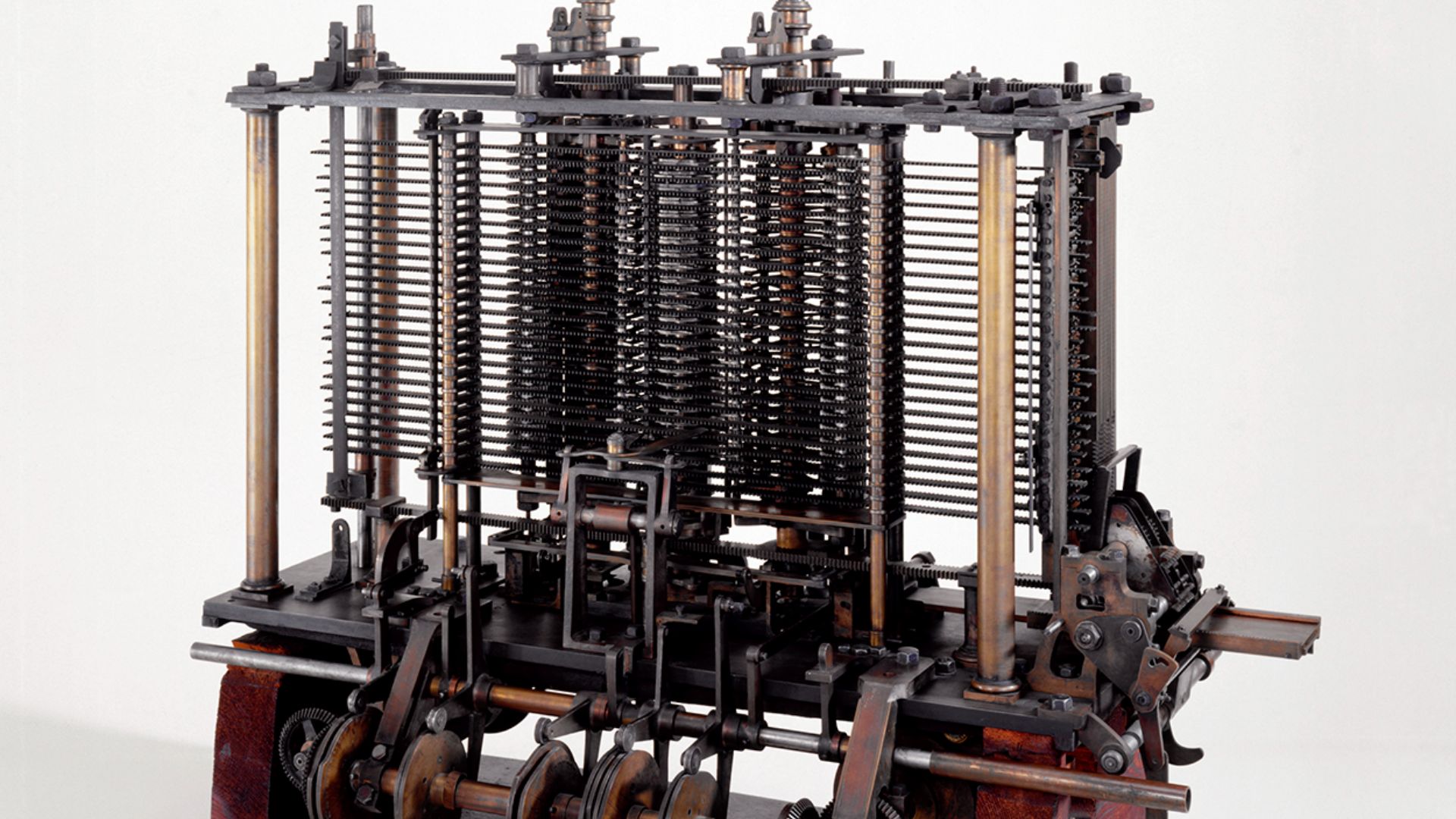
Charles Babbage’s Analytical Engine is one of the earliest designs for a programmable computer. Babbage worked on the idea in the 1830s, though the machine wasn’t completed in his lifetime. The Computer History Museum describes it as a general-purpose programmable machine with a “Store” for numbers, a “Mill” for arithmetic, punched cards for instructions, and features such as loops, branching, and output methods.
In simpler terms, Babbage was designing a machine that could do more than repeat one calculation. At its most basic, it was meant to follow instructions and change what it did based on certain conditions. That sounds normal now, but for a machine imagined in the golden age of steam-powered mechanics, it was a huge step.
Ada Lovelace helped push the idea even further. In her notes on Babbage’s machine, she understood that a machine like this might work with symbols, not only numbers. The Computer History Museum explains her role in seeing computing as something bigger than basic math.
Built For Problem-Solving
In terms of fully-realized computers, Konrad Zuse’s Z3 is one of the strongest candidates. Completed in Germany in 1941, it used about 2,300 relays, had a 22-bit word length, and worked with binary floating-point arithmetic. The Computer History Museum says the Z3 was used for aerodynamic calculations and was destroyed in a bombing raid in Berlin in 1943.
The Z3 could follow a program and carry out math without a person doing every step by hand. That was the main reason early computers mattered so much. They took slow, repetitive work and moved it into a machine that could keep going through the steps.
The Atanasoff-Berry Computer, usually called the ABC, handled a narrower job. John Atanasoff and Clifford Berry built it as a linear equation-solver, and the Computer History Museum says it could solve a variety of problems, but it was not programmable.
Colossus, built in Britain during World War II, had another job: it helped decipher Lorenz-encrypted messages, often called Tunny traffic, by reading ciphertext from paper tape and testing logical patterns.
ENIAC
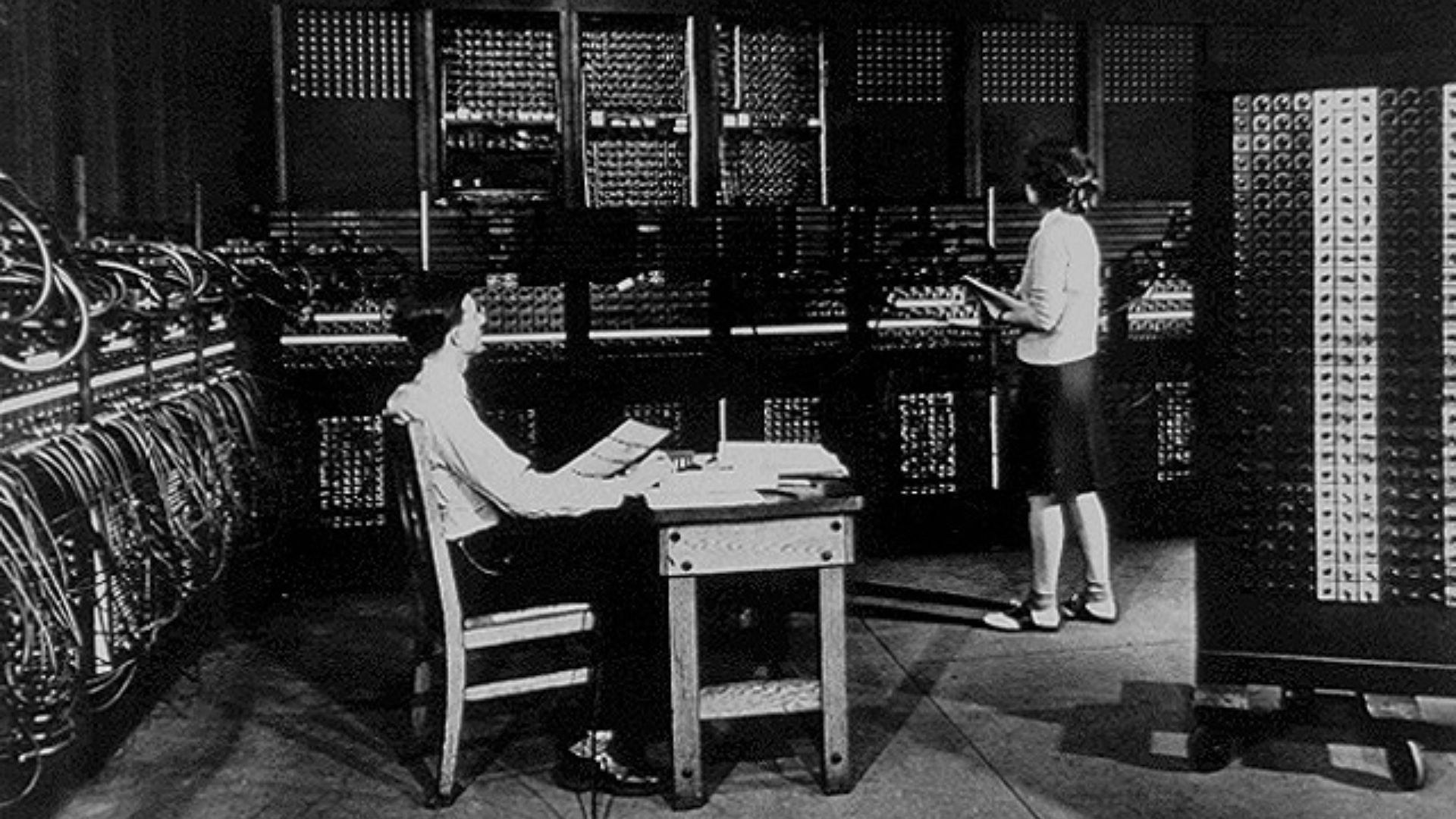 USGov-Military-Army on Wikimedia
ENIAC is the early machine many people picture when they think of the first computer. Built at the University of Pennsylvania and announced in 1946, its full name was Electronic Numerical Integrator and Computer. Penn Engineering identifies ENIAC as the first general-purpose electronic computer.
ENIAC was built because the U.S. Army needed faster ways to calculate wartime ballistics tables. Those tables helped with firing calculations for specific trajectories, which took a lot of math. Penn Engineering says ENIAC later produced firing tables at Aberdeen Proving Ground and was also used for weather prediction, atomic-energy calculations, cosmic-ray studies, and wind-tunnel design.
By today’s standards, ENIAC’s basic skills sound simple. It could add, subtract, multiply, divide, and calculate square roots, and it had 20 accumulators for addition and subtraction. Penn Engineering says it filled a 30-by-50-foot room, weighed 30 tons, used 18,000 vacuum tubes, and could turn a ballistics calculation that took 12 hours on a hand calculator into a 30-second job.
Stored Programs
Programming ENIAC was still a very hands-on job. Penn Engineering says each job required people to plug in cables and set switches, while the Computer History Museum says setting up a new problem could take many days to complete.
Once the machine was ready, it could run calculations at electronic speed, but getting it ready took people who understood the math, the hardware, and the setup.
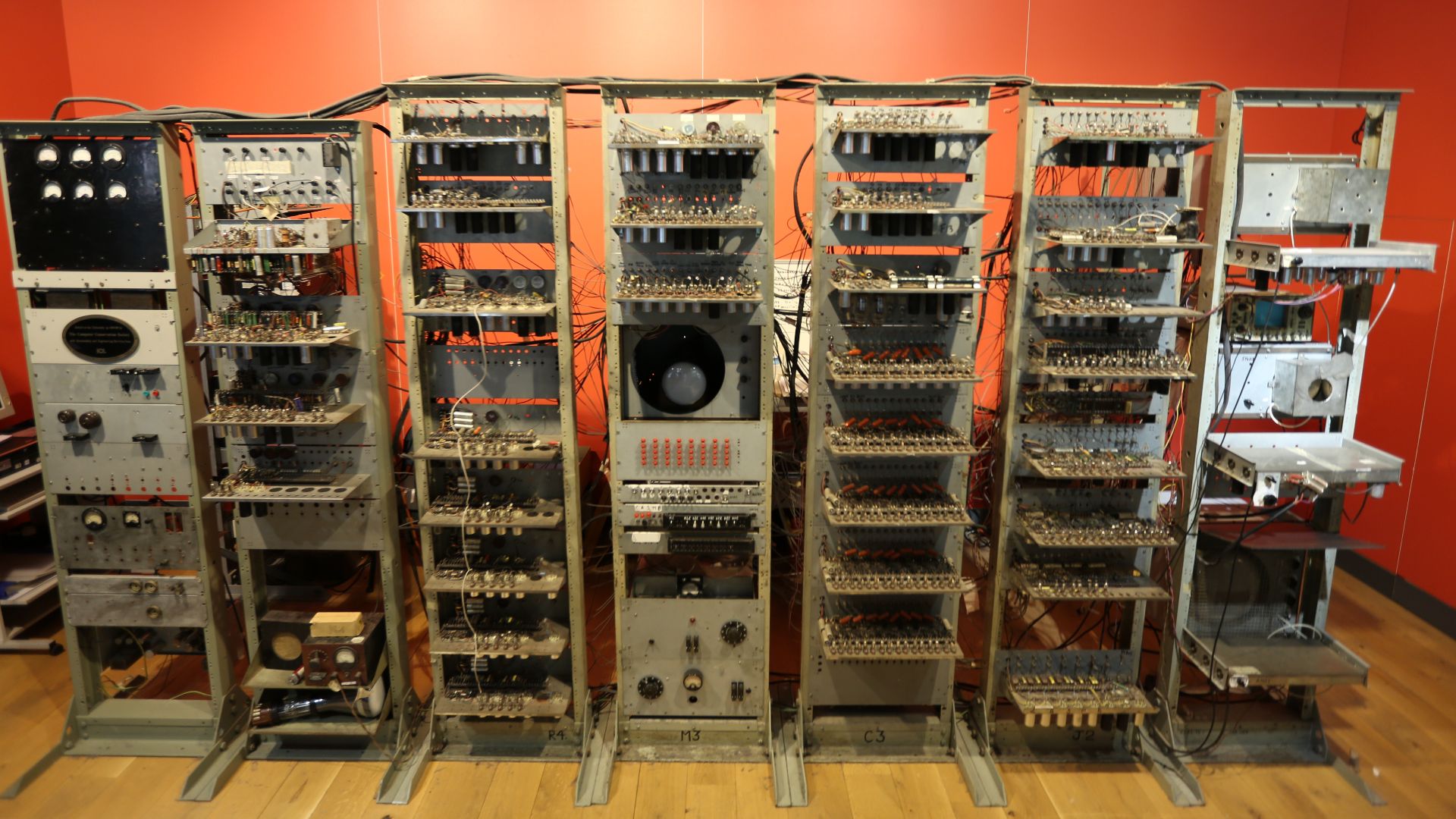
The Manchester Small-Scale Experimental Machine, nicknamed “Baby,” was the next major step toward modern computers. Built at the University of Manchester, it ran its first successful program on June 21, 1948. The university describes Baby as the world’s first stored-program electronic digital computer, meaning it could keep both data and a short user program in electronic memory.
Despite Baby’s success, it still wasn’t a machine made for John or Jane Doe. According to the University of Manchester, its first program ran at 11 a.m. and took 52 minutes to run through 3.5 million calculations before reaching the correct answer.
The first computers didn’t draw game worlds or animate characters, but they built the foundation for the calculations, rules, and fast responses that modern gaming and technology still depend on.