
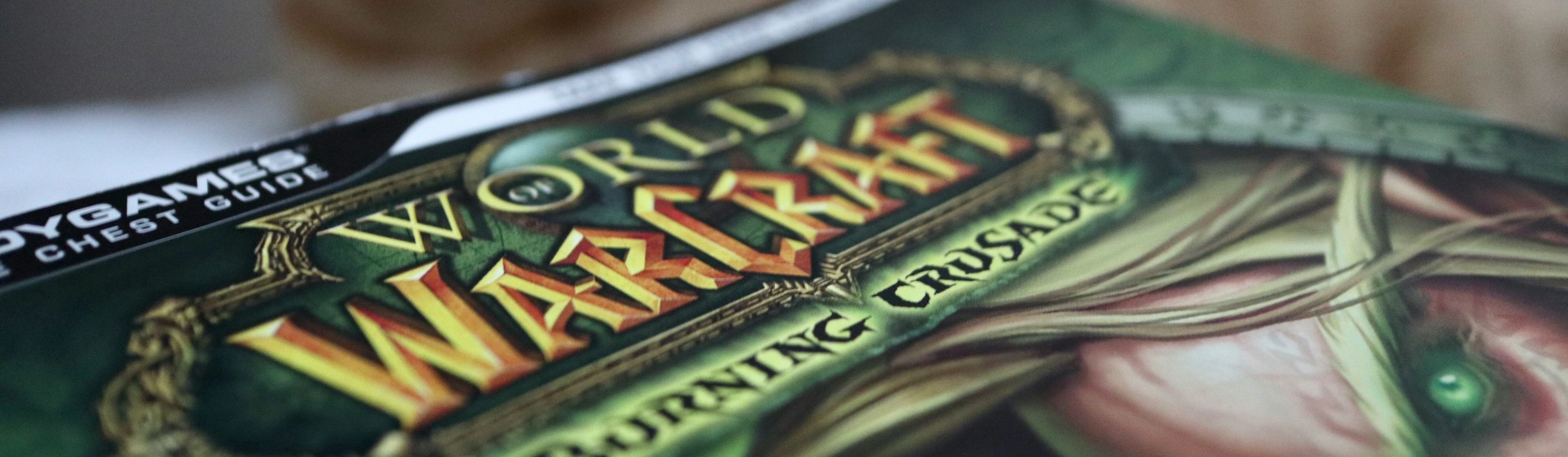
In September 2005, the busiest cities in World of Warcraft filled up with skeletons. A disease designed to stay inside a single dungeon had gotten loose, and it was killing weaker characters by the thousands. Players watched it jump from person to person in crowded streets, and nothing Blizzard tried could stop it for days.
The plague began with a programming mistake, but what happened next caught the attention of researchers who study real epidemics. Millions of players were making their own decisions about how to respond, and none of it had been scripted. Two years later, the outbreak had made its way into medical journals.
How A Raid Boss Started A Pandemic
The trouble began on September 13, 2005, when Blizzard introduced a new raid called Zul'Gurub. The final boss, Hakkar the Soulflayer, a giant winged serpent, used a spell called Corrupted Blood that drained players' health for about 10 seconds and spread to anyone standing too close. The effect was supposed to stay inside the raid, and its damage was balanced for high-level characters who could survive it.
The outbreak escaped through hunters' pets. If a pet caught Corrupted Blood and was dismissed before the effect wore off, the infection stayed with it. Summon that pet somewhere else, and it started spreading the disease again. Researchers later compared the pets to animal reservoirs, which can carry pathogens that spread to humans. Non-player characters became infected too, and because they couldn't die, they kept passing the disease to anyone nearby. Players could also teleport across the map in seconds, carrying the infection into new areas almost instantly.
Within hours, the capital cities of Ironforge and Orgrimmar were overrun. Weaker characters walking into them died almost on contact, and the news coverage at the time described hundreds of bodies lying in the virtual streets. The same academic analysis put the toll at tens of thousands of deaths on at least three servers.
Players Behaved Like People
Players with healing abilities headed into the worst-hit areas to help the sick, much like medical teams responding to a real outbreak. Others watched the game's world chat for warnings about infected cities, with messages reportedly flooding in whenever the disease reached somewhere new. One player recalled checking constantly to find out which areas were safe, since nobody wanted to walk straight into an outbreak.
Some players made things worse on purpose. They caught the plague deliberately and used healing magic to stay alive long enough to carry it into rival cities.
Blizzard tried to get infected players to keep their distance, but its quarantine efforts fell apart. About a week in, the company restarted every server. It took almost a month of patches and rolling restarts to stop the spread for good.
Why Epidemiologists Paid Attention
One of the epidemiologists who later studied the outbreak had been playing the game as a night elf hunter while it happened, the class whose pets carried the disease out of the dungeon. She and a colleague wrote it up in a 2007 study arguing that virtual worlds could fill a hole in disease modeling. Standard models tend to handle the biology well and the people badly. The collapse of the in-game quarantine, the authors argued, could not have been predicted from numbers alone.
Inside a game, researchers know the disease's exact parameters, and every player's response can be recorded without losing data. The study suggested that a designed virtual outbreak could produce a reasonable stand-in for how people react to a real one. A separate paper on the same incident had already appeared in another journal earlier that year. When Covid-19 arrived in 2020, the epidemiologist who'd been playing said the outbreak was shaping her pandemic modeling. Her argument was that players had been acting as themselves rather than playing a role.
The comparison has obvious limits. Players at the time skewed young and male, and people tend to gamble more freely with a character than with their own health. Resurrection encourages riskier behavior too, since a dead character comes back. A USC professor who also played at the time has pointed out that some games reward behavior people would never show offline.