How Tolkien’s Linguistics Degree Built Middle-Earth’s Languages
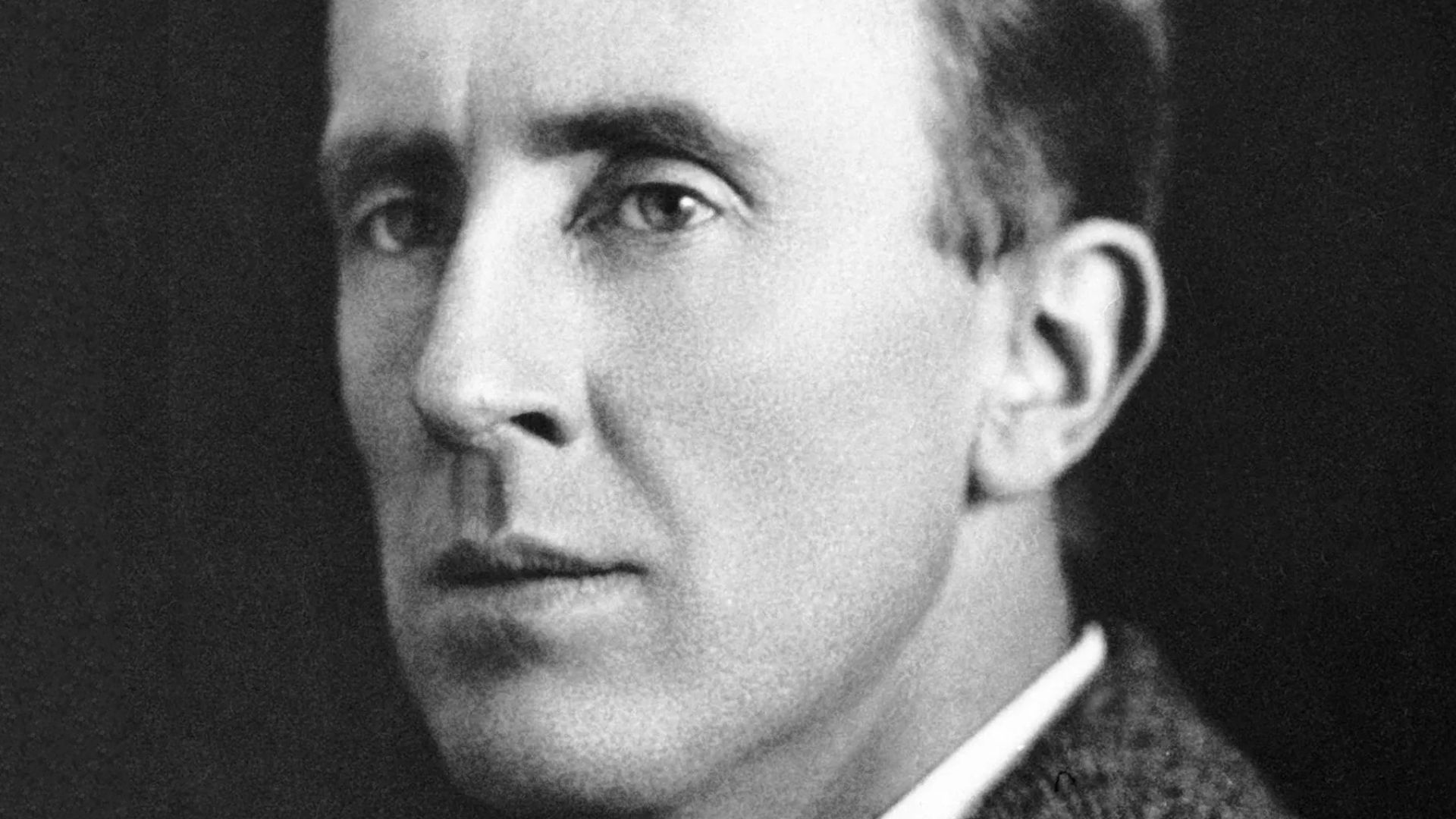 Unknown photo studio commissioned by Tolkien's students on Wikimedia
Linguistics is one of the degrees most often dragged through the mud for being "useless," but The Lord of the Rings, one of the highest-grossing franchises of all time, might not have been possible, or at least, as great, without J.R.R. Tolkien's connection to the discipline. A trained linguist, his scholarly background shaped every word uttered in Elvish, howled in Black Speech, or muttered in the Dwarven tongue.
One may argue that fully developing a made-up language wasn't necessary for the creation of the stories. However, you could also say Tolkien didn’t invent languages because he was writing fantasy; he wrote fantasy because he wanted a home for the languages he created. His degree in linguistics, combined with his academic career as a philologist at Oxford, became the backbone of an entire fictional civilization. He may have started as a philologist, but he became the "father" of modern fantasy and one of the most influential authors of all time.
Philology is the historical study of languages and how they evolve. Tolkien built Elvish languages like Quenya and Sindarin from real linguistic roots. They followed grammar rules, phonetic patterns, and centuries of fictional history. Some were inspired by real languages he admired—Finnish heavily influenced Quenya’s structure and sound, while Welsh shaped the lyrical flow of Sindarin.
"They are invented languages, but they are completely logical, and they're linguistically sound," Fred Hoyt, a linguistics professor at UT Austin who teaches a course on Elvish, told The Guardian.
One of the most remarkable things about Tolkien's languages is his application of diachronic linguistics—the study of how languages change over time. In order to develop languages that sound as real as possible, he created a common ancestor language, Primitive Quendian, and then evolved it forward over thousands of fictional years. This gave his languages profound etymological depth and gave Middle-earth an illusion of history that no other fantasy world has ever matched.
 Vincent M.A. Janssen on Pexels
But of course, made-up languages can't exist without a world to give them context. The different languages in Middle-earth represent something about the people who speak them. Elves, graceful and poetic, have a language that's full of soft consonants and floaty vowels. Drawves, on the other hand, speak a more practical and secretive language. In this way, Tolkien used language as a tool for world-building, defining characters and cultures.
Tolkien and his languages set a new precedent for modern creators. Through the creation of his languages, he sent the message that world-building is about much more than maps and mythology.
He didn't just ask, "What should this character say?” but rather, “What history lives inside the words they speak?” He proved that words can be the roots an entire universe can grow from.
His linguistics degree didn't just build languages; it built a world. Part of what makes Middle-earth and LOTR so successful is how real it feels, even though it's a story of elves, hobbits, dwarves, and clearly fictional characters.