
When Apple unveiled Apple Intelligence at WWDC 2024, the tech world paid close attention: the company promised a sweeping AI transformation of its device ecosystem, from a smarter, context-aware Siri to intelligent writing tools, generative images, and deeply personalized features. For a brand with Apple's reputation for polished, user-first design, it seemed like the AI race had finally found its most formidable challenger.
That anticipation, though, has largely given way to frustration. Since iOS 18.1 launched in late October 2024—a full month after the iPhone 16 itself—Apple Intelligence has been marked by delayed features, accuracy failures, unresolved privacy trade-offs, and a widening gap between what was advertised and what actually works. Whether you're a longtime Apple user or simply someone following the AI space, it's worth digging into why this particular launch has fallen so flat.
The Features Don't Quite Deliver
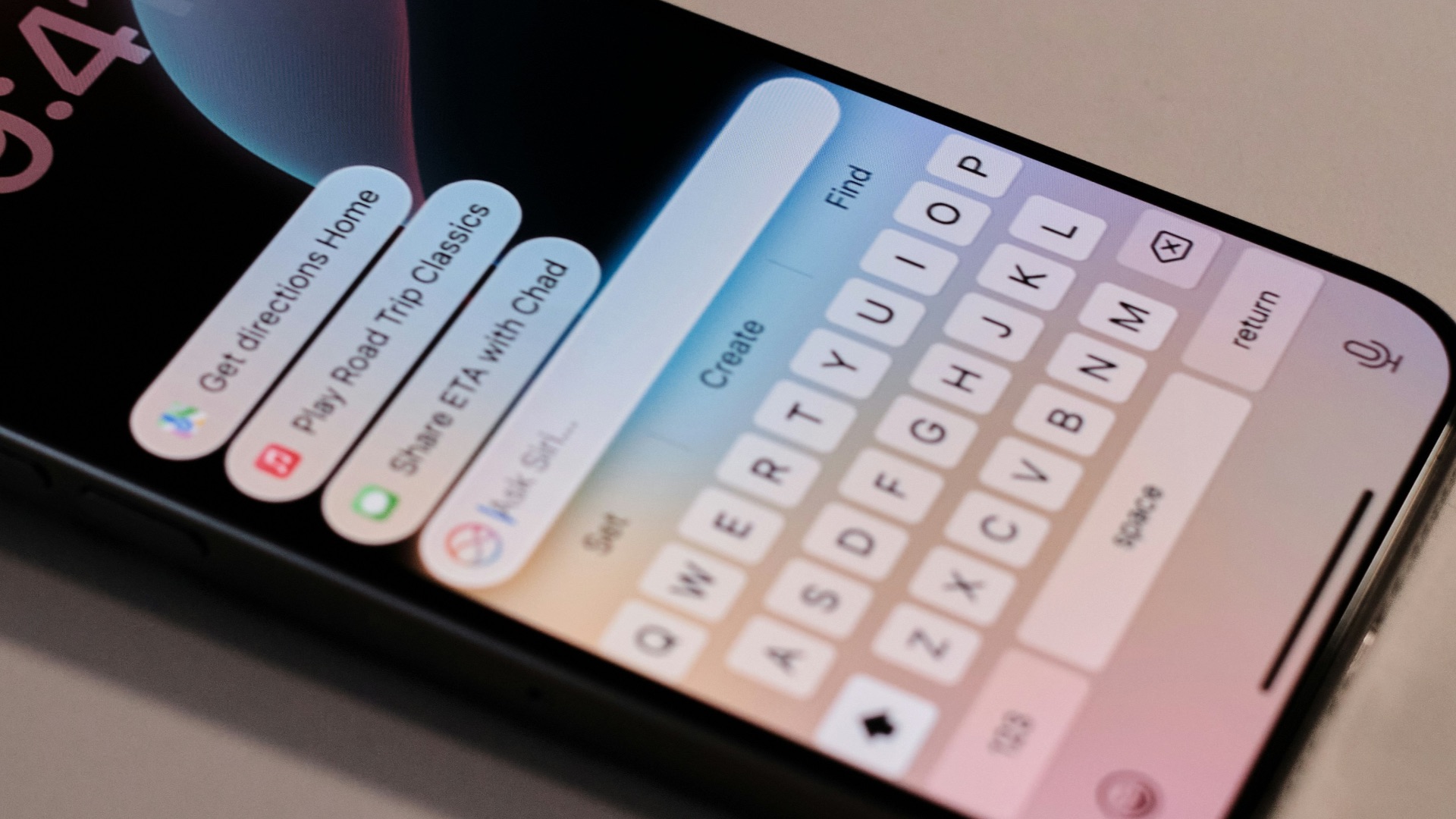
One of the most glaring issues with Apple Intelligence is how little it delivers compared to what Apple spent months advertising. Key Siri upgrades, including personal context awareness and cross-app actions, were among the most-hyped parts of the rollout; yet they remained absent long after the iOS 18.1 launch. Apple has since had to push those features further down the road, and its performance has been described as "underwhelming," with conservative iPhone shipment forecasts issued to suppliers as a direct result.
The notification summary tool became the rollout's most high-profile stumble. Designed to help you quickly process incoming alerts, it produced a stream of hilariously inaccurate summaries instead; Apple was ultimately forced to disable the feature for news and entertainment apps after the BBC, the Washington Post, and Sky News all flagged serious errors. The feature was reinstated in iOS 26, but only with stricter warnings and expanded user controls.
Even setting aside the accuracy problems, the features that did ship haven't exactly inspired awe. Writing tools, photo cleanup, Genmoji, and basic summaries are functional, but they don't represent the leap forward Apple's marketing suggested you'd be getting. When Apple framed this as a new era for how you'd interact with your devices, a modest set of additions doesn't quite live up to the moment.
Two years later, WWDC 2026 was supposed to be the moment Apple finally put those doubts to rest. Instead, it mostly confirmed how messy the original Apple Intelligence pitch had become. While Siri AI—a more conversational, more context-aware version of its predecessor with richer answers—seems to be a monumental update, there's also a caveat behind the rollout: some capabilities will be limited to newer, higher-memory devices. That means the iPhone 16 Pro, the very device that was marketed to be built for Apple Intelligence, won't get the full experience.
Privacy Promises Are More Complicated Than They Seem
Apple built Apple Intelligence around its Private Cloud Compute (PCC) architecture, which handles complex AI tasks without retaining your data on remote servers. When requests exceed what your device can manage locally, they're offloaded to Apple's dedicated hardware; data is encrypted in transit and processed ephemerally, with no persistent storage or activity logging. It's a thoughtful design, and Apple's commitment to on-device processing does give it a legitimate edge over some competitors, but the picture gets murkier once third-party integrations enter the equation.
The ChatGPT integration is where Apple's privacy story hits a wall. When Siri can't handle a request independently, it routes the query to OpenAI's ChatGPT, which operates under a different data framework. Apple requires your permission before any data is sent, and OpenAI doesn't retain those requests, but once that handoff happens, Apple's own protections are no longer in effect. For users who chose Apple specifically because of its privacy commitments, that's a meaningful caveat to understand.
Security researchers have also flagged a subtler concern worth raising. Prompts routed through Private Cloud Compute can carry rich personal context—names, notes, calendar details, and addresses—which could expose identifying information in the event of a compromise. Apple's architecture is designed to minimize this risk, but it can't eliminate it entirely. For a company whose brand identity is so closely tied to privacy, even a theoretical gap in that commitment tends to attract outsized scrutiny.
It's Falling Behind the Competition
Apple Intelligence didn't arrive in a slow market, and its rivals haven't been standing still. While Apple was untangling its Siri overhaul, Google had already embedded Gemini across its device ecosystem and Microsoft had integrated OpenAI's GPT models throughout its productivity suite; Samsung's Galaxy AI launched on the Galaxy S24 in early 2024 and quickly expanded to include features like real-time call translation and Circle to Search. Apple was already playing catch-up when it made its debut, and the gap hasn't convincingly closed since.
Availability is another factor that limits Apple Intelligence's broader impact. The feature is restricted to the iPhone 15 Pro, iPhone 15 Pro Max, the full iPhone 16 lineup, and Macs and iPads with M1 chips or newer; Samsung's Galaxy AI, in comparison, already extends to mid-range devices like the Galaxy A35 and A55. Google's Gemini also supports over 40 languages while Apple Intelligence initially launched with US English only, a notable constraint for a product positioned as a worldwide platform shift.
All that said, Apple Intelligence isn't a lost cause; the company has the hardware integration, the engineering depth, and the user loyalty needed to course-correct. The new Siri AI may very well be a game-changer. But the delayed features, the strange notification summaries, mediocre tools, and the widening competitive gap all point to a product that has yet, even two years later, to deliver on its own promises. You'd be well within reason to feel like Apple Intelligence still has a long way to go and a lot to prove, and based on everything that's happened so far, Apple clearly knows it, too.