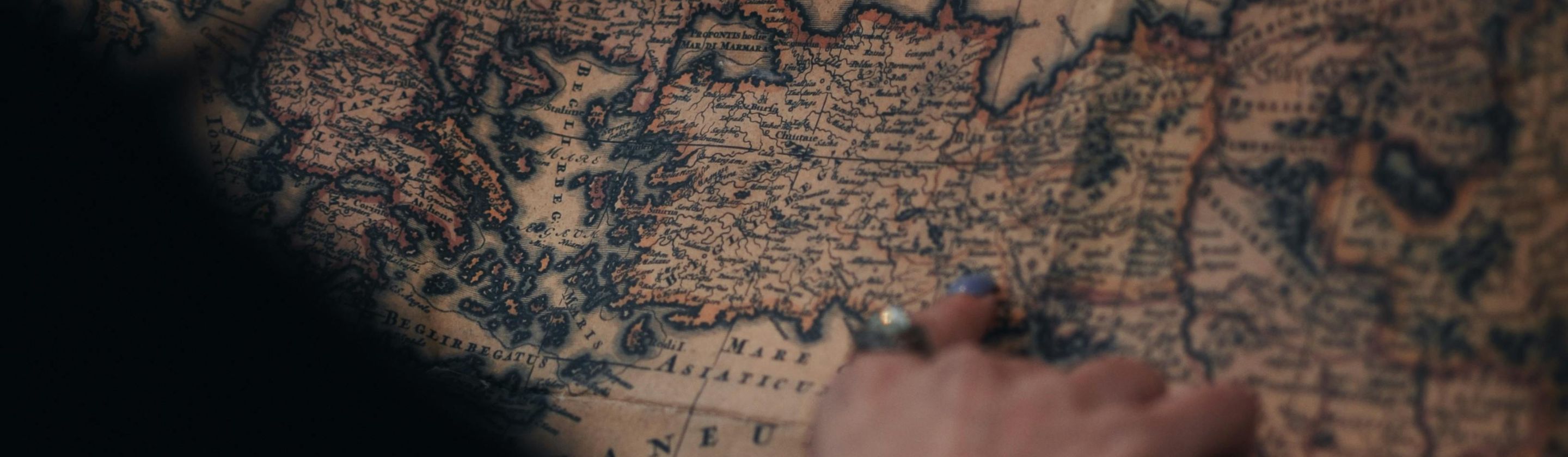
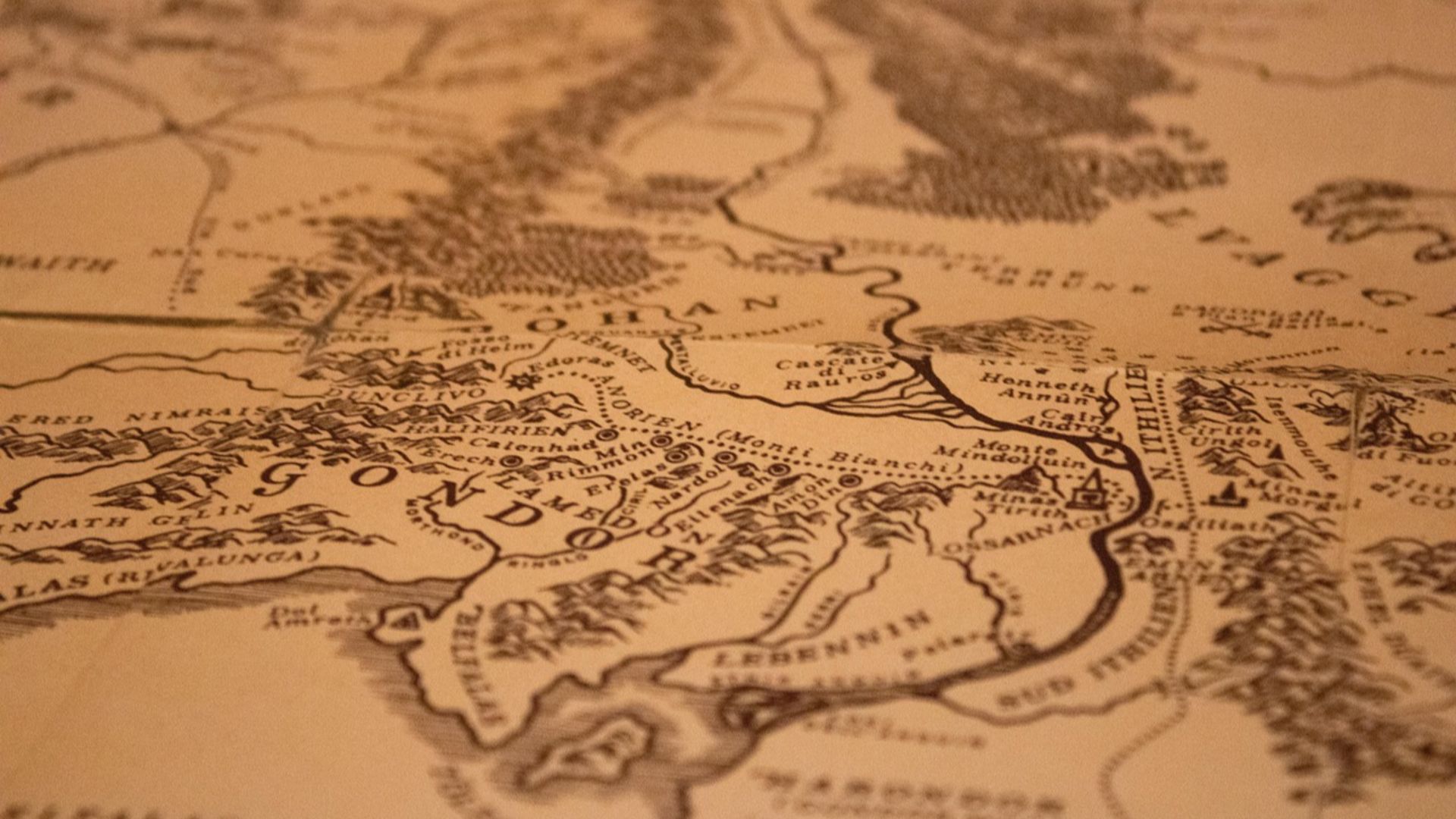
Fictional maps have a way of making imaginary places feel real. Give readers or players a coastline, a mountain range, a road into the woods, and suddenly the land feels easier to believe. For gaming and technology, that matters because maps aren’t just decorative extras anymore. They’re part of how we understand fictional worlds.
In games, a map can shape how you move, think, and make choices. It can point you toward a quest, sure, but it can also tell you what kind of place you’ve landed in. A crowded city map, a fogged-out wilderness, and a huge unexplored continent each set a different mood before the story has to say much at all.
The Shape of The Imaginary
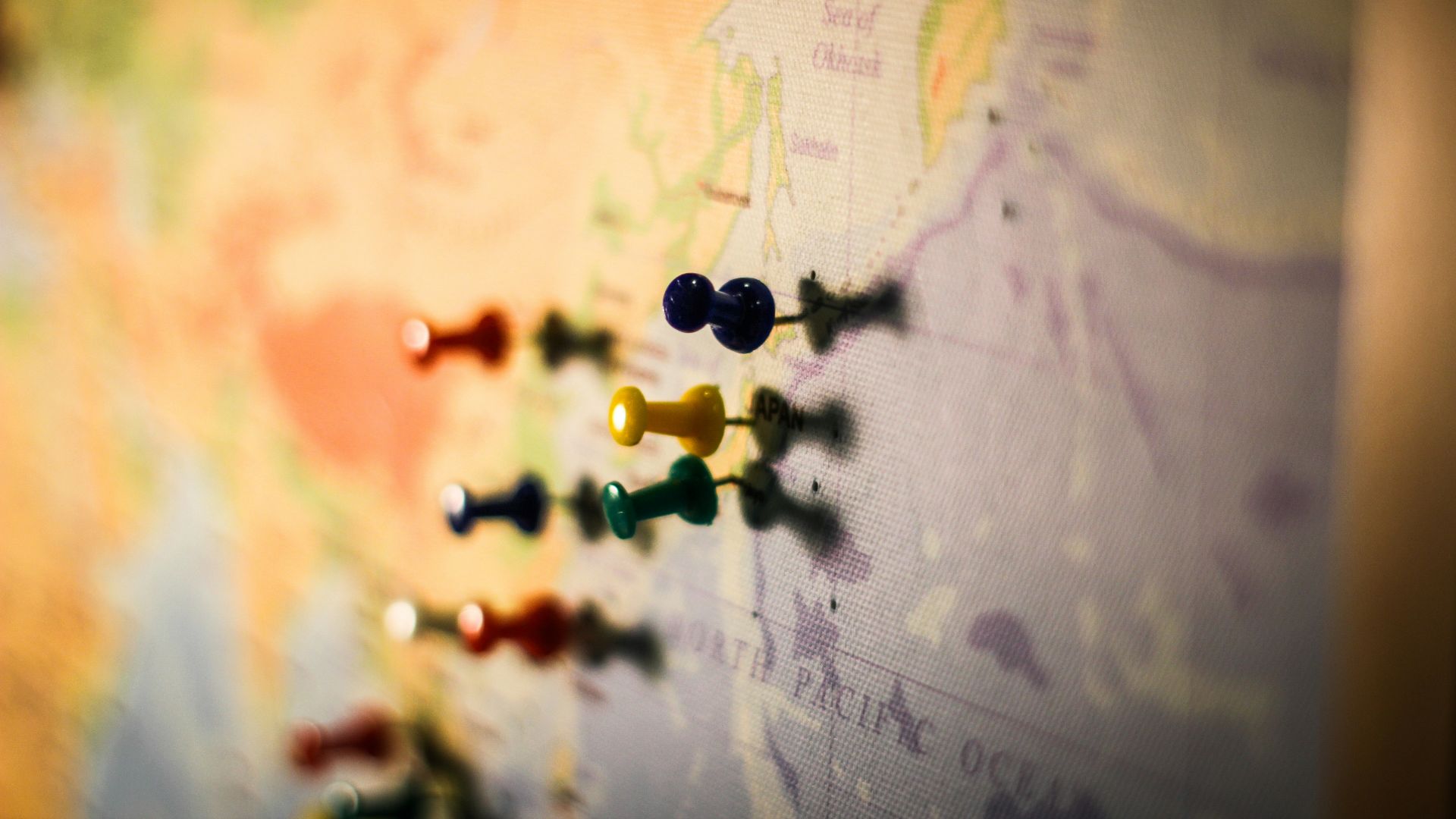
Robert Louis Stevenson’s Treasure Island is one of the clearest examples of a fictional map helping a story take form. The Library of Congress describes how Stevenson made a map of an island, gave it the title Treasure Island, and then began writing a list of chapters.
Fantasy often works the same way, especially when geography shapes the journey. Ursula K. Le Guin’s official site says that when Le Guin started a new story, she would begin by drawing a map. The same source describes Earthsea as an archipelago, says the map was Le Guin’s own creation, and notes that her original Earthsea map was drawn before she started writing A Wizard of Earthsea.
That’s part of the pull of fictional maps. They make invented places feel just a little more real. A kingdom, island chain, or ruined region becomes more than a loose backdrop once it has distance, direction, and obstacles. Even a name near the edge of the map can hint at pieces of the story that haven’t opened up yet.
A fictional map can also carry mood without much explanation. It doesn’t need to spell out every political feud, monster nest, or abandoned settlement. It just needs enough structure for the world to feel like it continues beyond the page or screen. That little bit of order gives the imagination somewhere to stand.
How It Changes The Way We Play
Video game maps have an extra charge because players don’t only look at them. We use them, check them, doubt them, forget them, and open them again because we’ve somehow walked in the wrong direction. The loop becomes part of the game’s rhythm.
Mini-maps show how strongly that design can shape behavior. A mini-map, sometimes called a radar screen or corner map, shows a miniature top-view version of the game world or part of it. This view often covers more space than the player’s main camera can see. That can make movement easier, though it can also pull your eyes toward the interface instead of the street, forest, or skyline in front of you.
The Legend of Zelda: Breath of the Wild shows a different kind of map design. Nintendo UK described the game as an “open-air adventure” and said that idea was built through exploration, scale, combat, music, and other design elements. Players climb, scan the horizon, mark places they want to visit, and then head toward whatever catches their eye. The map helps, but the landscape does plenty of teaching on its own.
The Legend of Zelda: Tears of the Kingdom adds another wrinkle because it returns to a familiar version of Hyrule rather than starting over. In Nintendo’s developer interview, Fujibayashi says there are now “the skies and caves to explore,” while Dohta says using the same setting mattered because the team could add ideas it couldn’t include in the previous game. In the same interview, Takizawa says that when even a familiar place is “augmented with something of worth,” players begin to see it differently.
The Hidden Systems
The map players see is only one layer of a modern game world. Behind the parchment screen, the corner radar, or the glowing overlay, there are often invisible systems telling characters and objects where they can go. Fictional maps, especially in games, are also technical maps. They help the world run.
Unity’s documentation says developers create a NavMesh to define an area of a scene where a character can navigate intelligently. It also explains that the NavMesh is generated and displayed as an overlay on the underlying scene geometry when the Navigation window is visible. That documentation is available through Unity. In simpler terms, the player may see a street or hillside, while the game also sees walkable space.
Epic’s Unreal Engine documentation explains the same basic idea from another major toolset. It says Unreal’s Navigation System gives pathfinding capabilities to artificial intelligence agents, and that a Navigation Mesh is generated from the world’s collision geometry to represent navigable space in a level. The Unreal Engine source is available through Epic Games. That hidden layer helps enemies, companions, and other AI-controlled characters move through the world in ways that feel believable.
Procedural generation takes this map-making work even further. A 2024 survey hosted on arXiv defines procedural content generation as the automatic creation of game content using algorithms. The same survey says procedural content generation has a long history in both the game industry and academic world. Instead of placing every cave, planet, or room by hand, developers can build systems that create content through rules.
Still, the strongest fictional maps aren’t powerful only because they’re large. A hand-built island can be more memorable than a galaxy if its paths, cliffs, ruins, and empty spaces feel purposeful. Fictional maps matter because they don’t just show where things are. They make you want to go there.