
Augmented reality first reached a mass audience by placing digital creatures and objects over real streets, parks, and landmarks through a smartphone screen. That breakthrough proved people were willing to move through physical spaces while interacting with virtual content, but it also revealed the limits of holding a phone at arm’s length. The next stage will need to feel less like checking an app and more like receiving useful information naturally as you look around. Developers are now working toward systems that understand not only where you are, but what surrounds you and why it matters.
That shift depends on lighter wearable displays, more accurate spatial maps, faster on-device processing, and software that can recognize objects without constantly sending information to distant servers. It will also require convincing people that augmented reality offers more than novelty filters or location-based entertainment. Navigation, training, shopping, communication, and accessibility may ultimately prove more important than another digital scavenger hunt.
Augmented Reality Is Moving From Phones to Glasses
Smartphones made early augmented reality accessible because millions of people already carried a camera, display, processor, and location sensor in their pockets. However, looking through a handheld rectangle interrupts natural movement and occupies at least one hand. Glasses could place directions, messages, translations, and visual guidance directly within a person’s field of view.
Recent processors designed specifically for smart glasses support cameras, wireless connections, artificial intelligence, and small visual displays while attempting to control heat and power consumption. Newer platforms can perform certain AI tasks directly on the glasses, reducing the need to send every request to a phone or cloud service. That can improve response speed and allow devices to recognize what the wearer is seeing more naturally.
The ideal device won’t force users to choose between looking stylish and accessing useful technology. People are unlikely to wear heavy equipment throughout the day simply because a demonstration appears impressive, especially if the glasses become hot or require frequent charging. Consumer models introduced in 2026 show real progress, but their high prices and limited battery life demonstrate how much work remains.
Spatial Understanding Will Make Digital Objects More Useful
Early mobile augmented reality often treated the physical world as a simple background for digital graphics. The software could estimate location and detect a flat surface, but it didn’t truly understand whether it was looking at a doorway, sidewalk, table, or moving vehicle. More advanced spatial systems are being built to recognize objects, map environments, and determine exactly where digital content belongs.
Precise spatial mapping could transform navigation by placing arrows beside the correct hallway, staircase, or transit entrance rather than providing only a general direction. In unfamiliar buildings, users might receive instructions that account for floor levels, closed passages, or accessible routes. Outdoor guidance could identify the correct storefront or entrance without requiring someone to compare a small map with nearby buildings.
The same technology could support workers who need instructions while keeping both hands available. A technician might see the correct component highlighted, while a warehouse employee could receive visual guidance toward a specific shelf or package. Training programs could demonstrate each step directly on the equipment instead of separating instructions from the task.
Everyday Services Will Matter More Than Spectacle
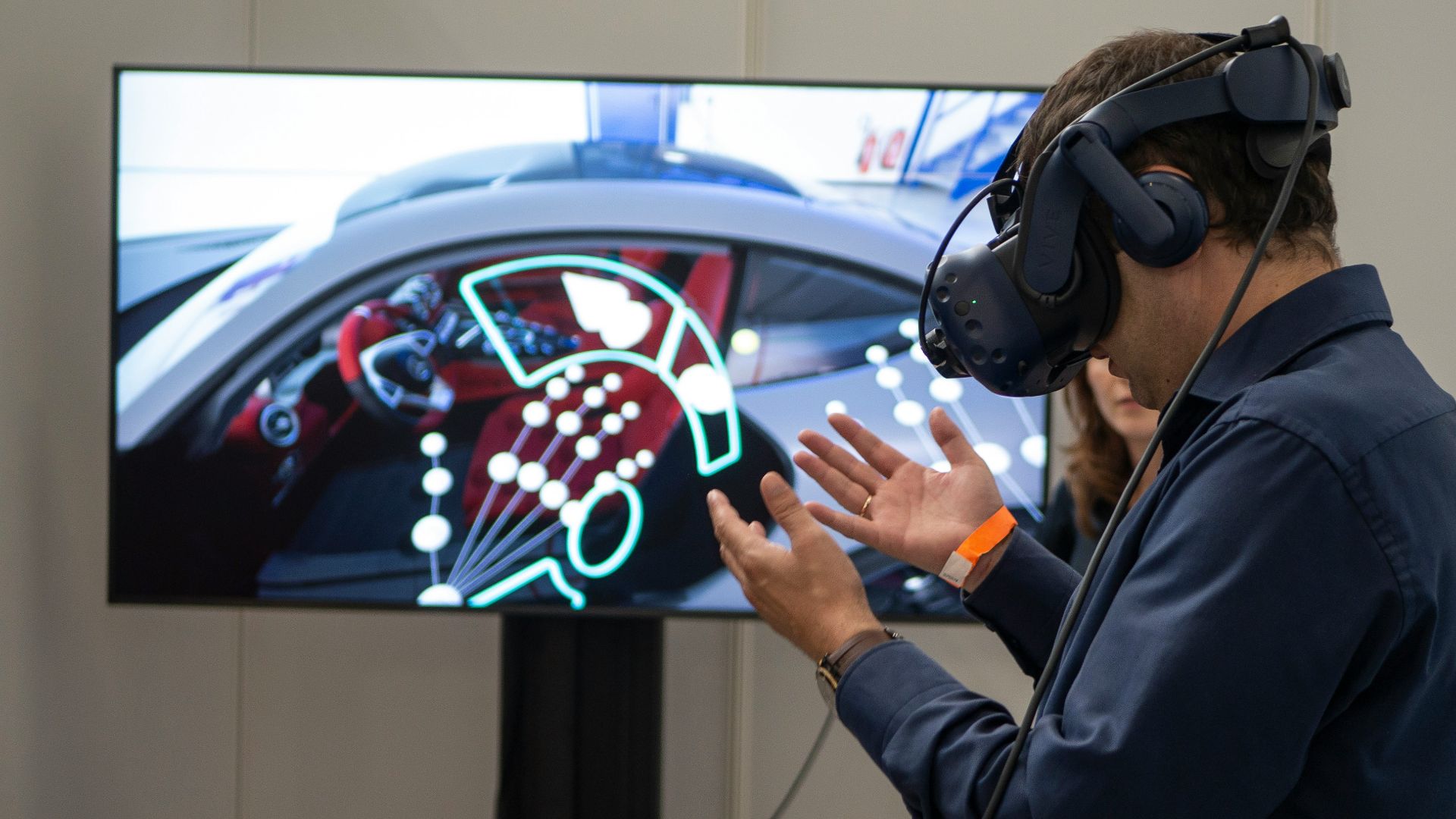
Augmented reality’s future may depend less on dramatic digital characters and more on ordinary moments when information appears at exactly the right time. Live translation could place readable text over a foreign-language sign, while captions might help someone follow a conversation in a noisy room. A shopper could view measurements beside furniture before bringing it home, and a traveler might see transit changes without repeatedly checking a phone.
Browsers could also make augmented reality easier to access by reducing the need to download a separate application for every experience. A restaurant, museum, retailer, or repair service could provide an interactive view through a webpage that works across compatible devices. Web-based standards are intended to let developers create immersive content for different phones, headsets, and glasses through a more consistent framework.
Privacy will determine whether people accept these systems in shared spaces. Glasses that continuously observe the environment could capture faces, conversations, workplaces, and private homes, even when the wearer isn’t intentionally recording. Clear indicators, local data processing, permission controls, and limits on facial recognition will be necessary to build trust.
The next major advance in augmented reality probably won’t arrive as one irresistible entertainment release that suddenly changes every habit. It’s more likely to emerge through gradual improvements that make glasses lighter, maps more accurate, digital objects more stable, and everyday services easier to reach. Once the technology becomes comfortable enough to forget and useful enough to rely on, people may stop thinking of it as augmented reality at all. The real leap will occur when digital assistance fits into daily life without pulling attention away from the physical world.