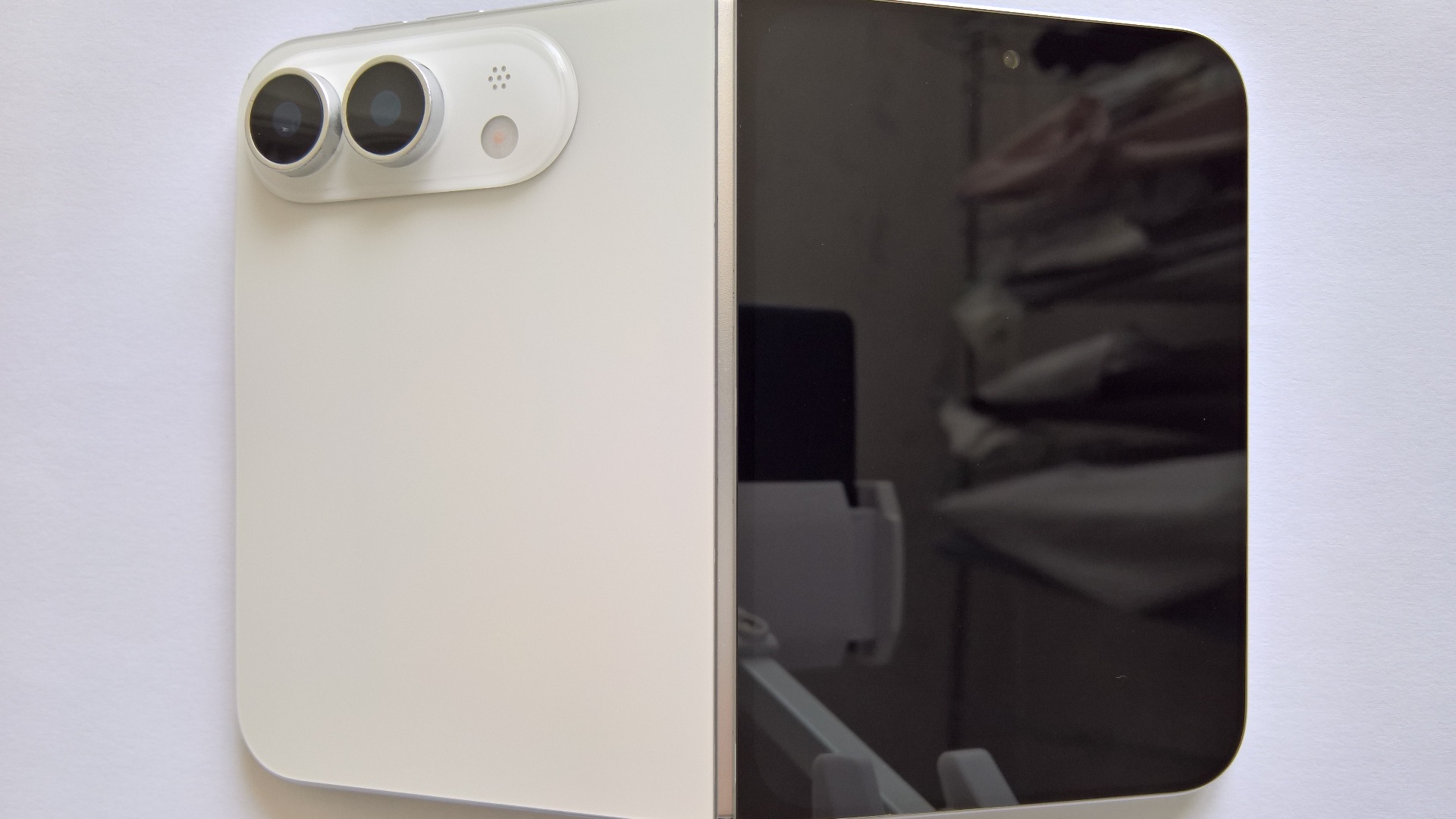
Tired of buying similar-looking iPhones every year? Well, Apple fans finally have something to cheer about: the company's first foldable device. Introduced in September, the iPhone Duo is, technically, three screens in one. If you're familiar with the form, this likely won't wow you at all, but all those new to this compact build will likely be impressed with the new design.
But of course, all that innovation—late as it is—doesn't come without a cost. Unless you've got a good chunk of money to throw down (think $2,000 from the get-go), you're probably not so convinced yet. Will this new piece of tech really change your life? Here are three standout features that might just convince you to grab one yourself.
The Foldable Display
We know, we know—this one is pretty much a given. But if you've never held a foldable device in your life, the iPhone Duo's dual-display design is worth mentioning. For the specs: when closed, you get a 5.4-inch Super Retina XDR OLED outer display. Unfold it, and you're looking at a 7.6-inch OLED display, the largest screen Apple has ever put on an iPhone.
Of course, Apple being Apple, they're going to make the experience uniquely theirs. That means, unlike the experience you might get with other folding devices, the Duo will give you much more interactive animations that just make the entire thing more pleasant to use. The displays themselves also carry many of the technologies you'd expect from a premium iPhone. Both support ProMotion with adaptive refresh rates of up to 120Hz, Always-On functionality, HDR, True Tone, and outdoor brightness reaching 3,000 nits. The inner screen even has a nano-texture finish designed to reduce glare. And hey, if you're an artist, you'll probably be excited to know that you can the Duo has Apple Pencil USB-C support.
Perhaps more impressive is how thin Apple has made the hardware despite that folding mechanism. The Duo measures only 5.2 millimeters thick while open and uses a Grade 5 titanium frame and hinge cover. Here's another kicker: the Duo also has an IP68 water- and dust-resistance rating, meaning you could theoretically drop it in a swimming pool and it'd still come out no worse for wear.
Cameras, Cameras, Cameras
With its folded design, the Duo has a pretty interesting camera setup. It's no iPhone 18 Pro Max, of course, but the back still features a 48MP Fusion Main camera and a 48MP Fusion Ultra Wide camera. On top of that, there's a 12MP Center Stage front camera and an under-display FaceTime lens as well. Plus, with Duo Preview, which displays the camera's live preview on the outside screen, you can adjust your framing and pose before you press the shutter. Want to take a selfie instead? The Duo preview will also work, meaning you don't need to rely purely on the front-facing camera.
But there are even more features: Apple has also introduced Smart Take, an on-device AI running on the A20 Pro chip that can analyze what's happening in front of the camera. That means it can automatically capture an image when it sees that the people in the frame appear ready. Taking a photo with kids? There's also Kid Cue, which shows fun animations on the outer display to encourage children to look toward the camera.
The second screen even changes video calling. With Duo FaceTime, people standing alongside you can view and participate in a FaceTime conversation through the outer display while the main screen remains facing you. It's a great example of how the Duo's folding design is used intuitively rather than merely treating the second screen as an accessory.
A20 Pro Gives the Bigger Screen the Power It Needs
Of course, the only reason the Duo is able to achieve so much is largely in part due to its chip. Sharing the same A20 Pro chip as the one powering the new iPhone 18 Pro lineup, the Duo pairs a six-core CPU with a seven-core GPU and dual 16-core Neural Engines. Apple says the CPU is up to 20% faster than the A19 Pro, while its GPU is up to 40% faster, which you might notice if you're coming from an older device.
Thermal management has received extra attention as well. Apple connects the A20 Pro package directly to a custom vapor chamber that helps move heat away from the processor during sustained workloads. With this setup, the Duo delivers up to 35% better performance than the iPhone 17 Pro, which could be particularly useful for gamers or heavy AI users.
Battery rounds out the package with dual built-in rechargeable batteries, one on each side of the device. When using the outer display, you can expect video playback of up to 44 hours, or up to 31 hours on the larger inner screen. Fast charging can also boost the battery up to roughly 50% in around 20 minutes, so long as you use a compatible 60W-or-higher wired adapter.
All in all, the iPhone Duo might not be for everyone, but tech enthusiasts will probably be itching to get their hands on it. With an expansive dual display influencing everything from multitasking to photography, and a chip that provides the performance necessary to keep everything seamless, one thing's for sure: this is the future.